
Last updated September 20, 2026
Free on-site gate assessment - hinges, posts, and your LiftMaster or Nice gate operator checked before anything is quoted
The assessment is free and the quote is the invoice.
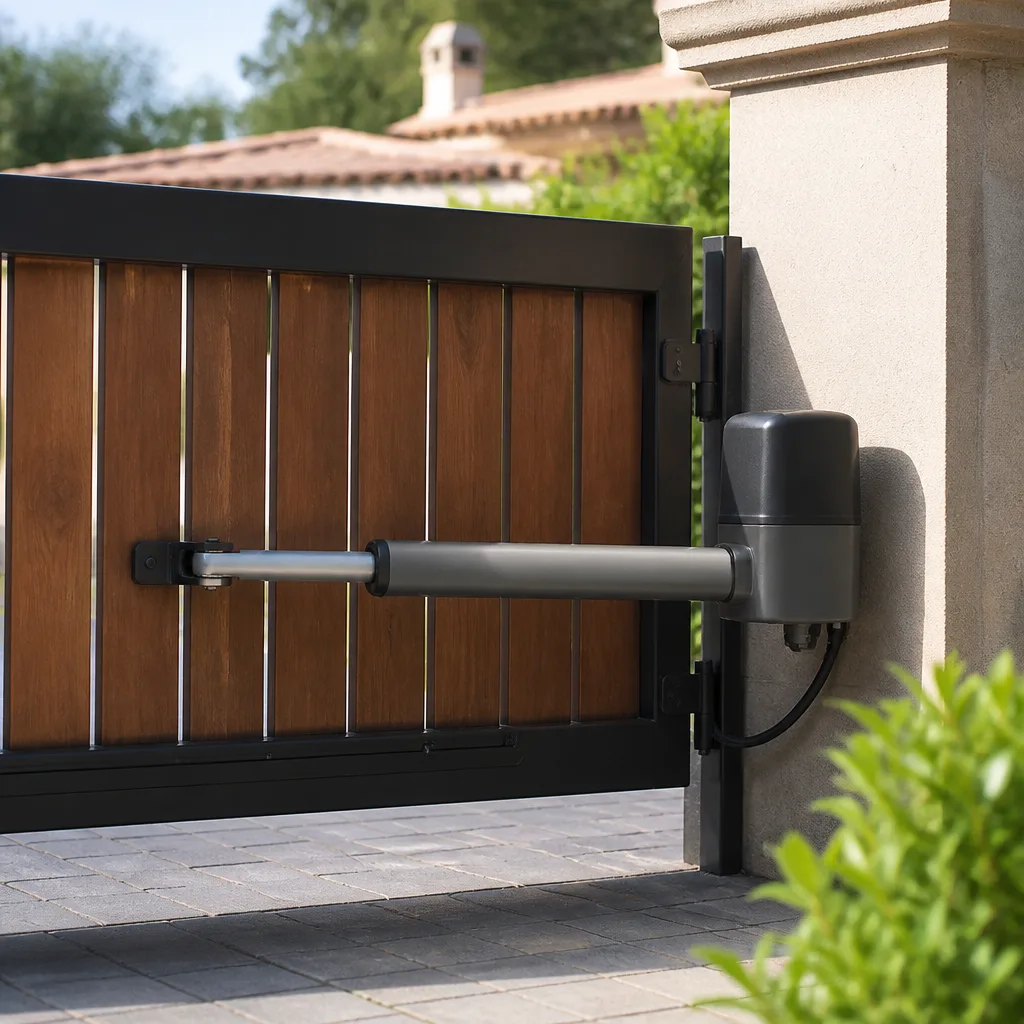
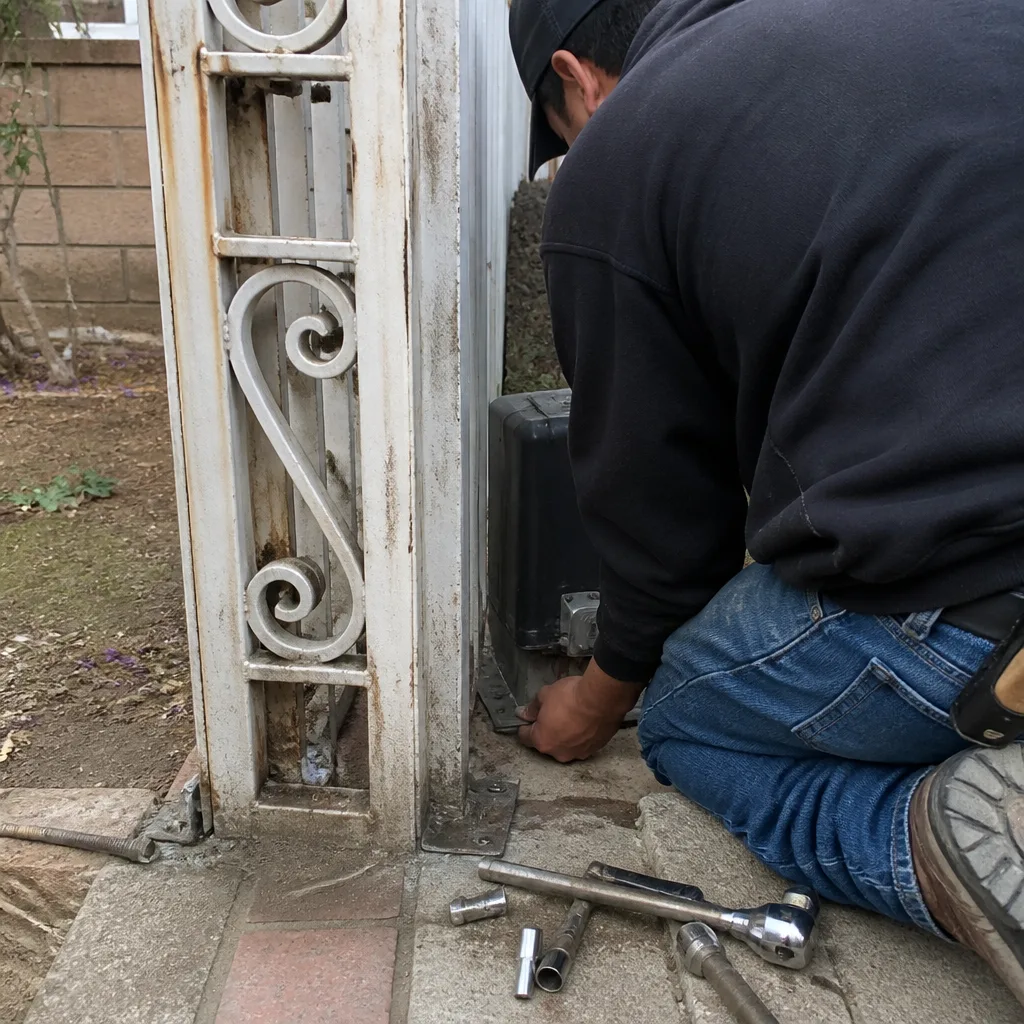 Before
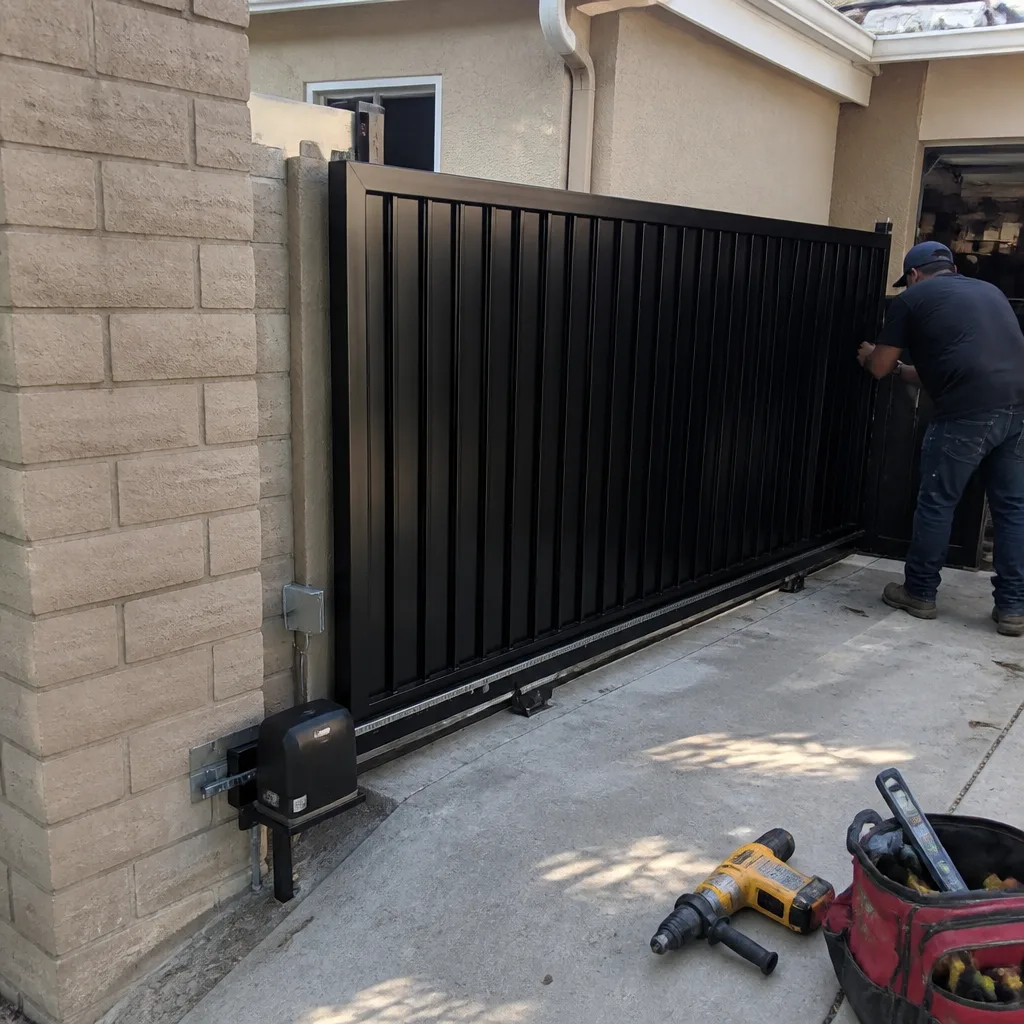 After
After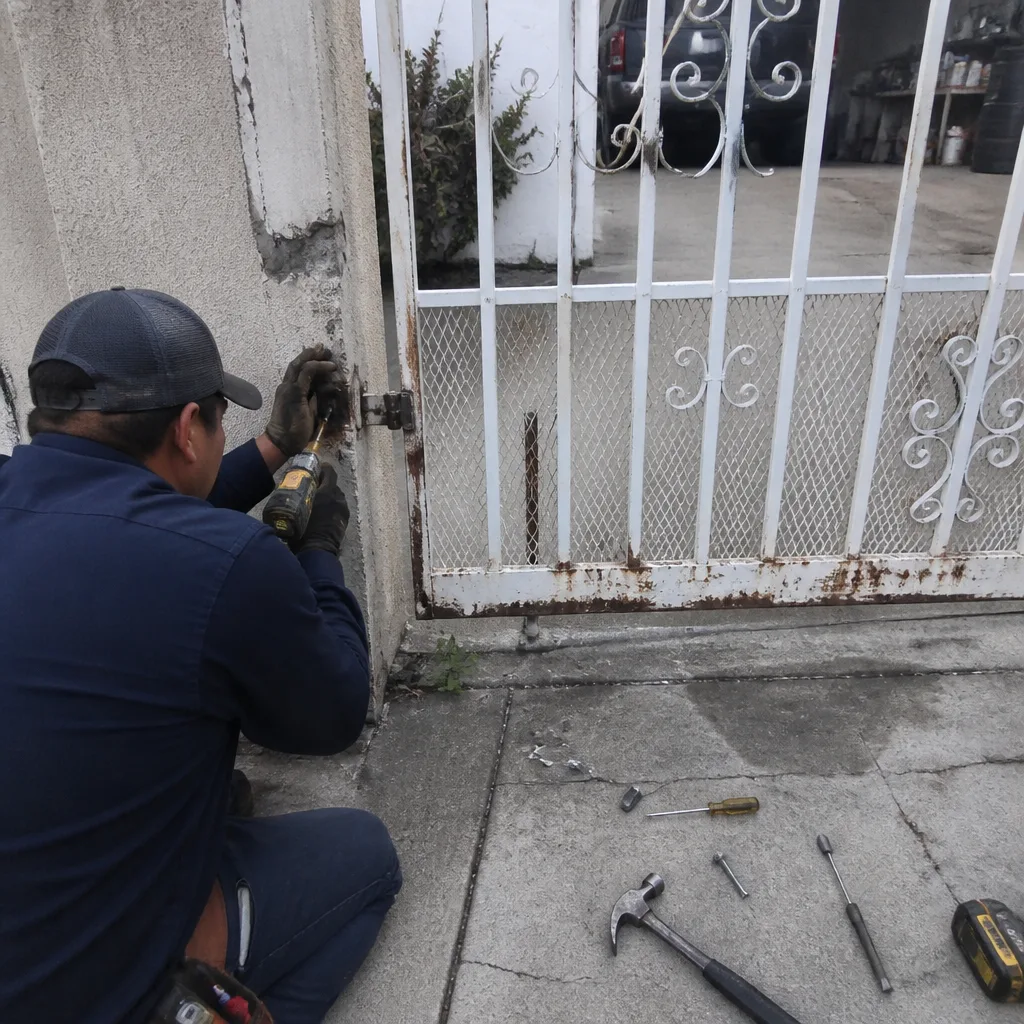 Before
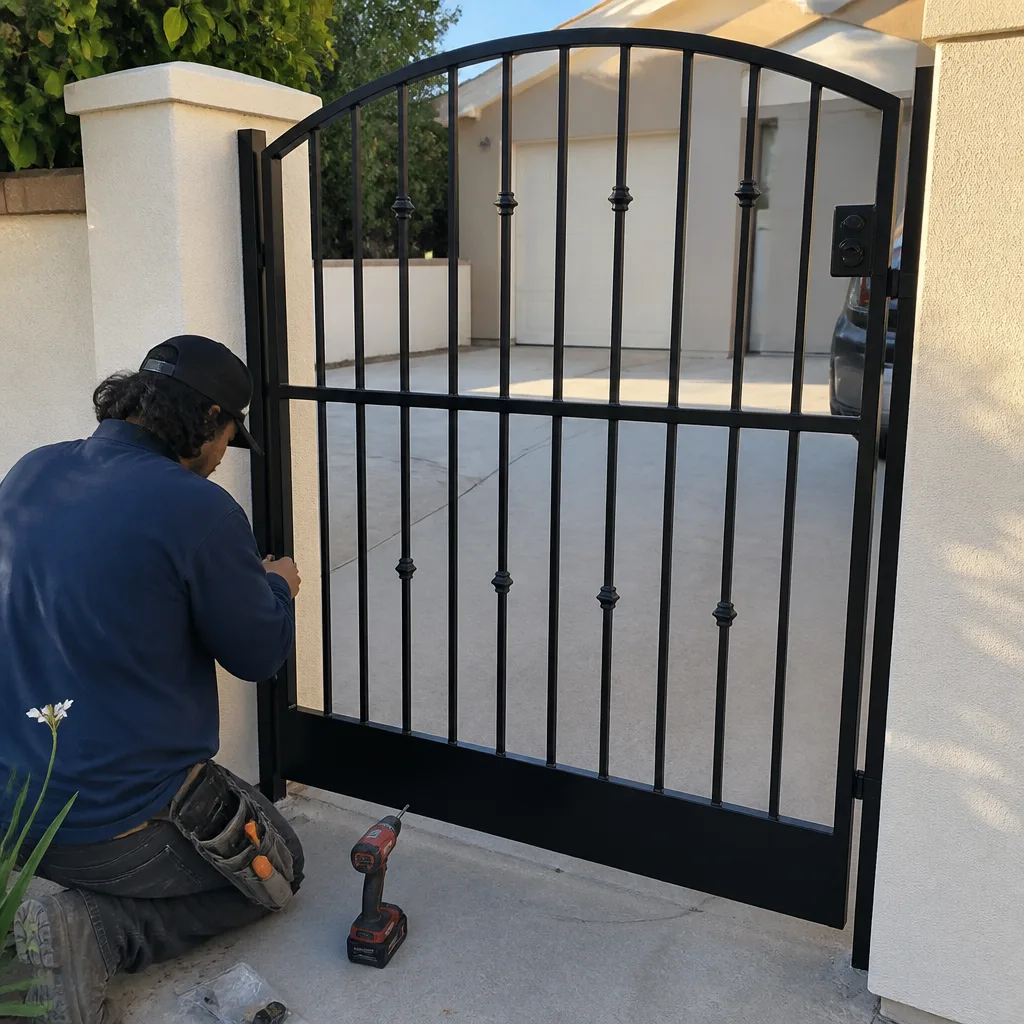 After
After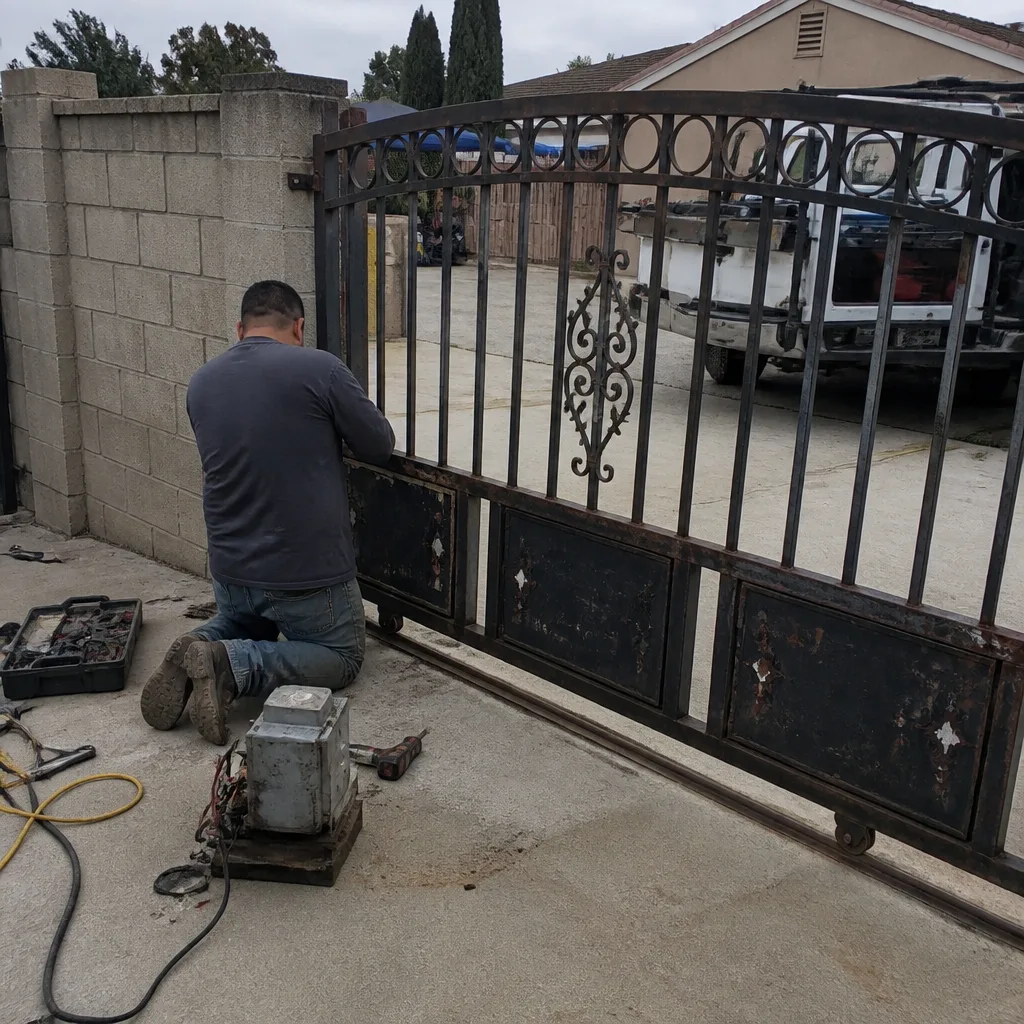 Before
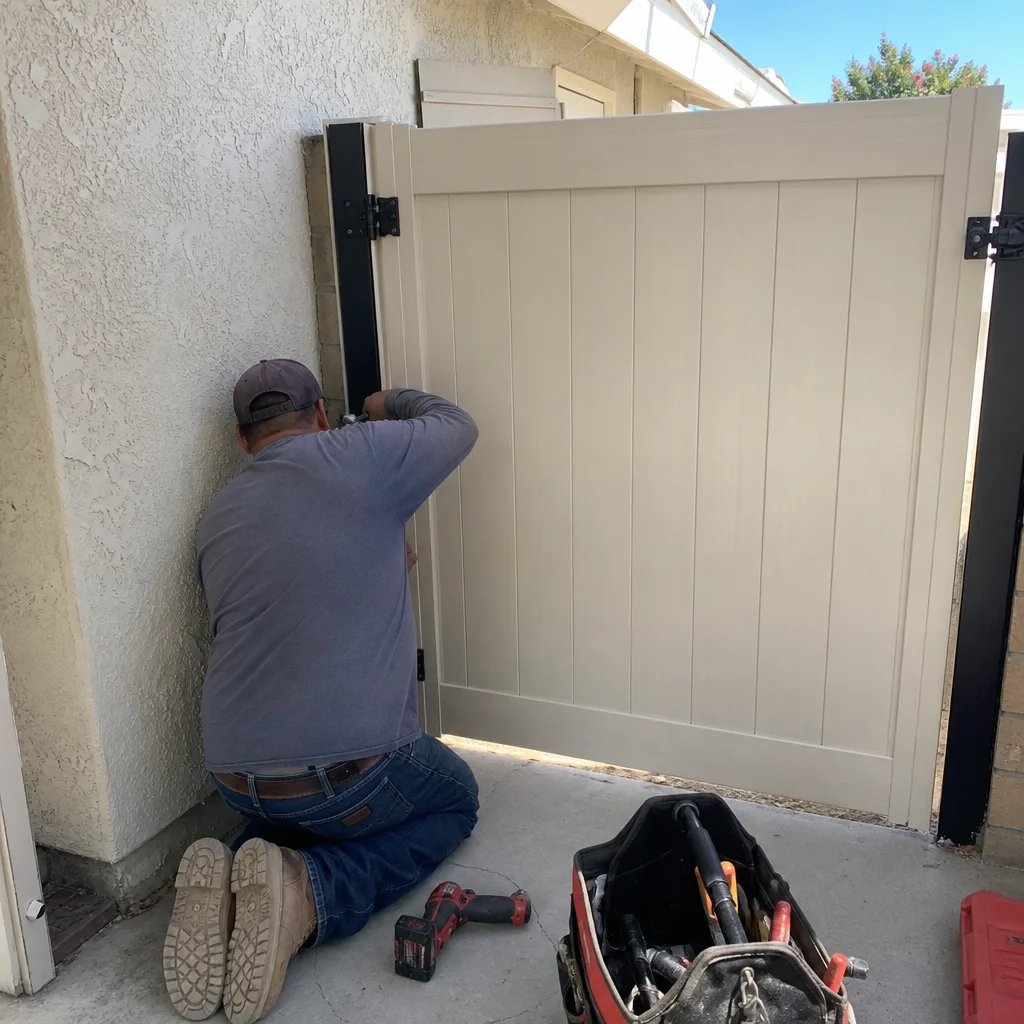 After
AfterGate Repair Cost Breakdown: The Garden Grove Homeowner’s Reference for 2026
Two gate repair quotes for the same problem can differ by $400 and both be honest, or one can be padding labor into parts markup and the other can be hiding a diagnostic fee in the trip charge. You can only tell the difference if you know what the line items should look like. This guide breaks the math open so any Garden Grove homeowner can read an estimate line by line, verify it against 2026 market rates, and know exactly what they’re paying for before a single tool comes off the truck. For ongoing care tips, see our Gate Repair Maintenance Checklist for Garden Grove Homeowners.
Quick Answer
Gate repair in Garden Grove costs between $185 and $1,900 in 2026, with most common repairs, control board replacements, hinge work, photo-eye realignment, landing between $220 and $550. A full swing-gate operator replacement runs $650 to $1,400 installed, while slide-gate motor jobs start around $900 and can reach $2,400 for heavy fabricated steel gates.
Table of Contents
- The Three Line-Item Math: Why Verbal Quotes Hide the Real Price
- 2026 Parts Costs for Common Garden Grove Repairs
- Diagnostic Labor vs. Repair Labor: Two Different Hours, Two Different Rates
- Repair vs. Replace: The 3-Year Math That Changes the Answer
- How to Read an Itemized Estimate (And What a Lump-Sum Quote Hides)
- The Garden Grove Factor: Climate, Soil, and Gate Wear Patterns
- The Real Cost of the Cheapest Quote: Re-Service Rates in Garden Grove
- Common Mistakes to Avoid
- When to Call a Professional
- Frequently Asked Questions
- The Bottom Line
BeforeAfterThe Three Line-Item Math: Why Verbal Quotes Hide the Real Price
Every gate repair job, whether it’s a gate repair in Garden Grove or a full operator swap, has three distinct cost components. Parts. Labor. Diagnostic time. A written estimate that separates these three things tells you what you’re paying for. A verbal quote that says “$650, all in” tells you almost nothing.
Here’s the breakdown of each component:
- Parts: The actual cost of the component, the control board, the hinge set, the photo-eye, the receiver board. Markup is normal. Every parts supplier charges it; so does every gate company. What matters is whether the markup is transparent enough for you to verify against market rate. A DoorKing control board that costs $210 wholesale shouldn’t appear on your invoice as a $600 line item.
- Diagnostic labor: The hour (sometimes two) the technician spends identifying what failed. This is real work. It requires a meter, experience, and patience. It should be a line item, not buried in the trip charge, and it should be itemized separately from repair labor.
- Repair labor: The hourly rate for the actual fix. This is why companies charge $95 to $160 per hour in Garden Grove. It covers the technician’s time, the truck, the insurance, the licensing, the training.
The reason verbal quotes hide this math is simple: a company that says “$650 all in” might be charging you $400 in parts markup and only $250 in real work. Or they might be charging $650 for a $80 hinge replacement because you don’t know what a hinge set costs in 2026. When the line items are visible, the quote becomes checkable. When they’re not, you’re paying for opacity.
2026 Parts Costs for Common Garden Grove Repairs
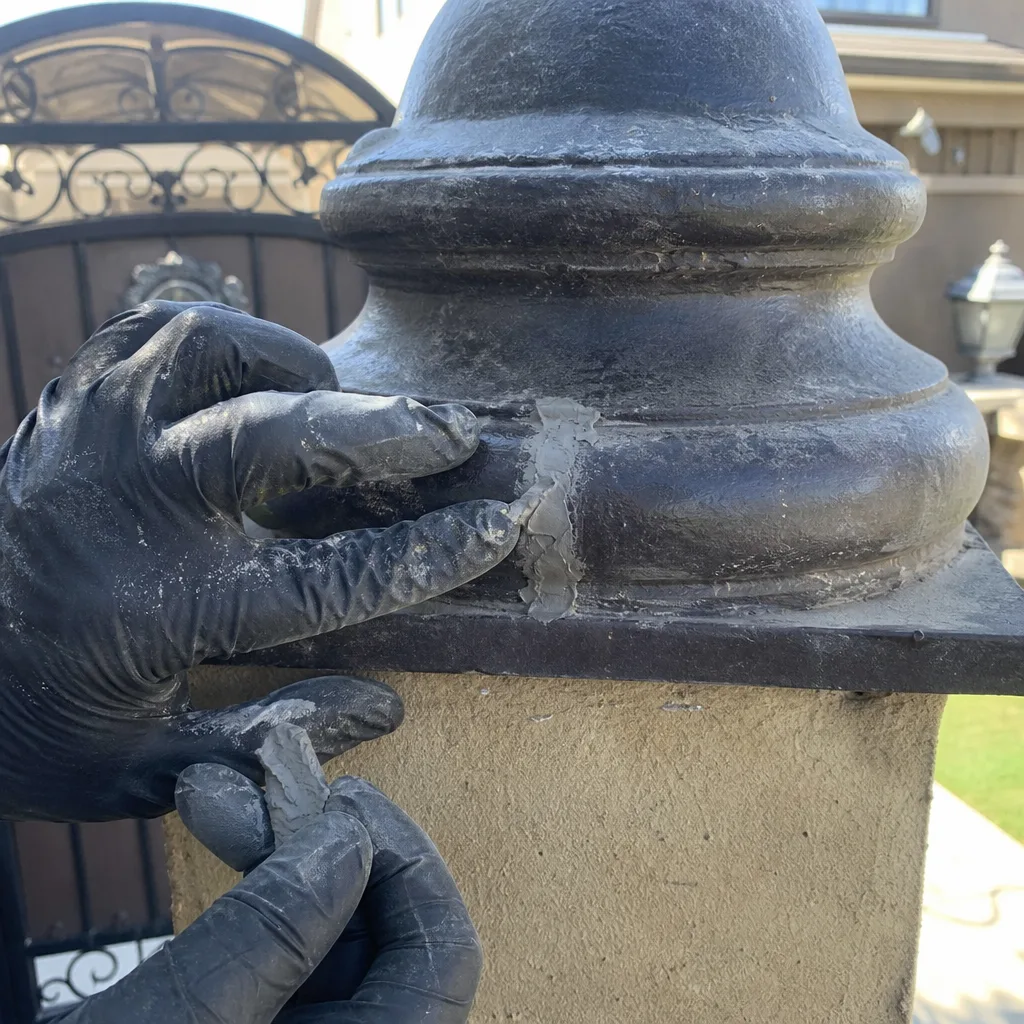
These are the parts we replace most often on Garden Grove residential gates, with honest market ranges for 2026. Use these numbers to verify any quote you receive. They reflect what a reputable company pays wholesale plus a reasonable, transparent markup, not the inflated price you’ll see when a contractor is padding parts to hide labor costs.
Control Boards
The brain of any automated gate. Control boards fail from power surges, moisture intrusion, and plain age. Garden Grove’s dry summers and occasional heavy rain cycles create the exact conditions that stress circuit boards: heat expansion followed by moisture, season after season.
- Ghost Controls control board: $95 to $180 for the board alone, $180 to $320 installed
- DoorKing control board: $210 to $380 for the board alone, $340 to $550 installed
- Elite control board: $190 to $350 for the board alone, $320 to $520 installed
- Mighty Mule control board: $80 to $150 for the board alone, $160 to $280 installed
Pay attention to that markup spread. A DoorKing board that costs $210 wholesale should land on your invoice somewhere around $300 to $380, not $600. If a quote shows a part number, search it. If it doesn’t show a part number at all, ask for one. A company that won’t tell you what part they’re installing is a company that doesn’t want you to check the price.
Photo-Eyes (Safety Sensors)
The photo-eye is the infrared beam that stops the gate if something crosses its path. In Garden Grove, we regularly see photo-eyes misaligned by sprinkler spray, sun-cooked wiring, or a post that settled after a rain. Replacement is straightforward:
- Photo-eye set (pair): $45 to $120 for the parts, $150 to $250 installed
- Photo-eye realignment only: $75 to $150 (labor only, no parts)
This is one of the most commonly misdiagnosed repairs in the industry. A technician who doesn’t understand limit-switch logic can spend an hour replacing a board when the real problem was a photo-eye two inches out of alignment. That’s why diagnostic labor matters: it pays for the hour that finds the actual problem, not the hour that guesses at it.
Hinge Sets
Hinges wear. Steel on steel, year after year, under a gate that can weigh 400 to 900 pounds. When hinges sag, the gate drags, the motor strains, and the operator burns out prematurely. Hinge replacement costs:
- Standard residential hinge set (two hinges): $60 to $180 for parts, $220 to $450 installed
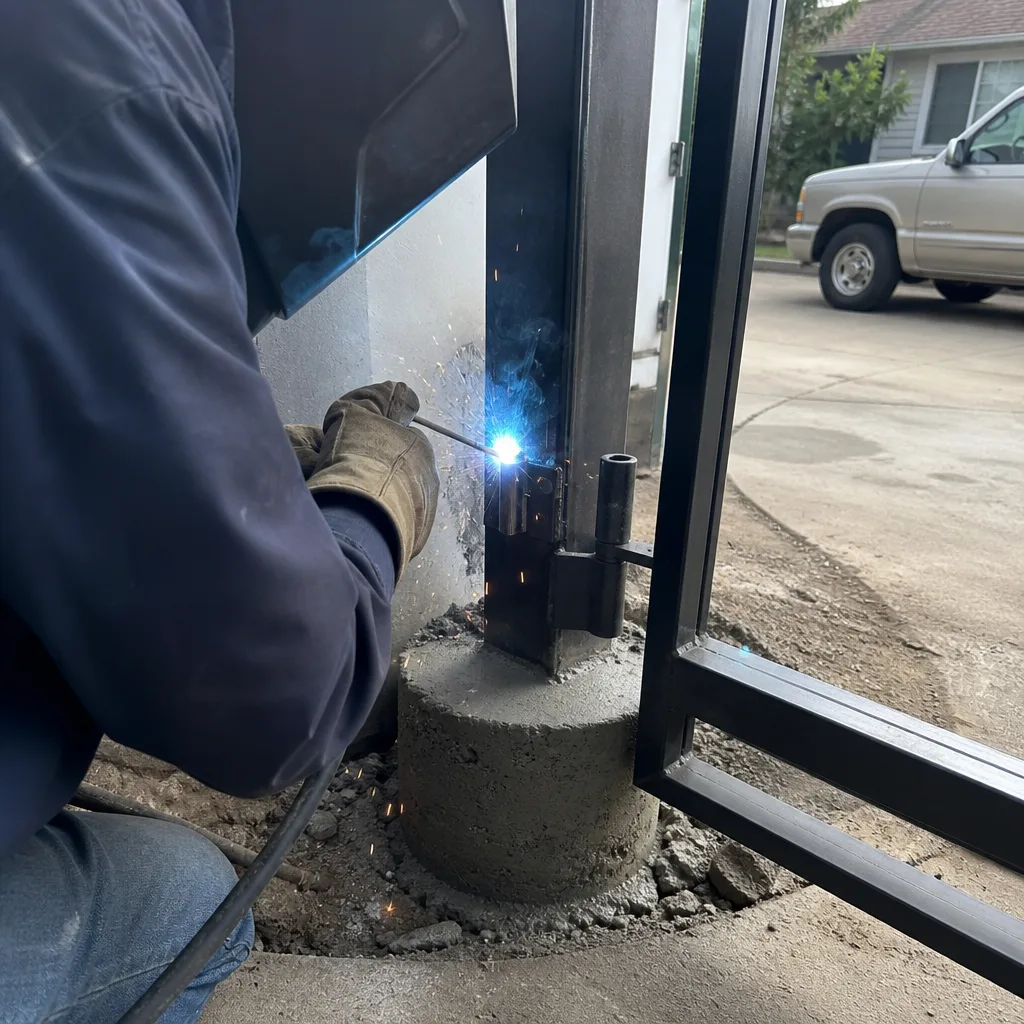
- Heavy fabricated steel gate hinge set: $150 to $400 for parts, $350 to $700 installed (requires welding or concrete work)
The price difference comes down to the gate’s weight and whether the post is still sound. If the post has shifted, hinge replacement becomes a structural job: post resetting, concrete work, and longer labor. That’s a different line item, and it should be itemized separately.
Operators (Gate Motors)
At gate motor and opener work in Garden Grove, operator replacement is the biggest single line item most homeowners will ever see. 2026 market rates:
- Swing-gate operator (Light-to-medium duty): $350 to $650 for the unit, $650 to $1,100 installed
- Swing-gate operator (Heavy fabricated steel): $600 to $1,100 for the unit, $1,100 to $1,900 installed
- Slide-gate operator: $500 to $950 for the unit, $900 to $1,800 installed
- Slide-gate operator (Heavy commercial-style residential): $900 to $1,700 for the unit, $1,600 to $2,900 installed
Installation includes mounting, wiring, limit setting, safety edge connection, and operator programming. If a quote doesn’t mention limit setting or safety edges, ask whether they’re included. A motor installed without proper limit setting will grind against the stop or short-cycle and fail early.
Diagnostic Labor vs. Repair Labor: Two Different Hours, Two Different Rates
Here’s a question most homeowners never think to ask: why does the diagnostic hour cost money, and why is it different from the repair hour? The answer is that they’re two different skills, performed at two different times, with two different failure modes.
Diagnostic labor is the hour the technician spends identifying what failed. It requires a meter, a wiring diagram, and the patience to trace a circuit through a control board that isn’t labeled. It’s not a “trip charge” or a “service fee.” It’s the specific work of finding the problem. A company that doesn’t separate diagnostic labor from repair labor is charging you the same rate for two different things because it’s easier than explaining the difference.
Repair labor is the hour spent fixing what was found. If the diagnostic hour and the repair hour happen on the same visit, and you’re being charged a single blended rate for the whole time, you’re probably being overcharged for the diagnostic portion. Diagnostic work should be billed at a flat rate, typically $85 to $150 in Garden Grove, separate from the repair hourly rate.
Here’s the step-by-step of how a properly documented repair actually works:
- Arrival and visual inspection: The technician walks the gate path, checks for physical obstruction, looks at the hinges, the chain, the wheels, the track. Ten to fifteen minutes.
- Electrical diagnostic: Meter on the board, checking incoming voltage, transformer output, limit switch continuity, photo-eye function. Twenty to forty minutes.
- Written findings: The technician tells you exactly what failed, what it costs to fix, and what it costs to replace. This should be in writing before any repair work starts.
- Approval: You sign off on the scope and price. No surprises.
- Repair: The actual fix happens now. This is the repair labor, billed separately.
- Documentation: Photos, part numbers, limit-switch readings. A record of what was found, what was set, and what was installed.
That sixth step is the one that separates a good gate company from a cheap one. If you don’t get a documented record, you’re paying for the same diagnostic work again next time something fails.
Repair vs. Replace: The 3-Year Math That Changes the Answer
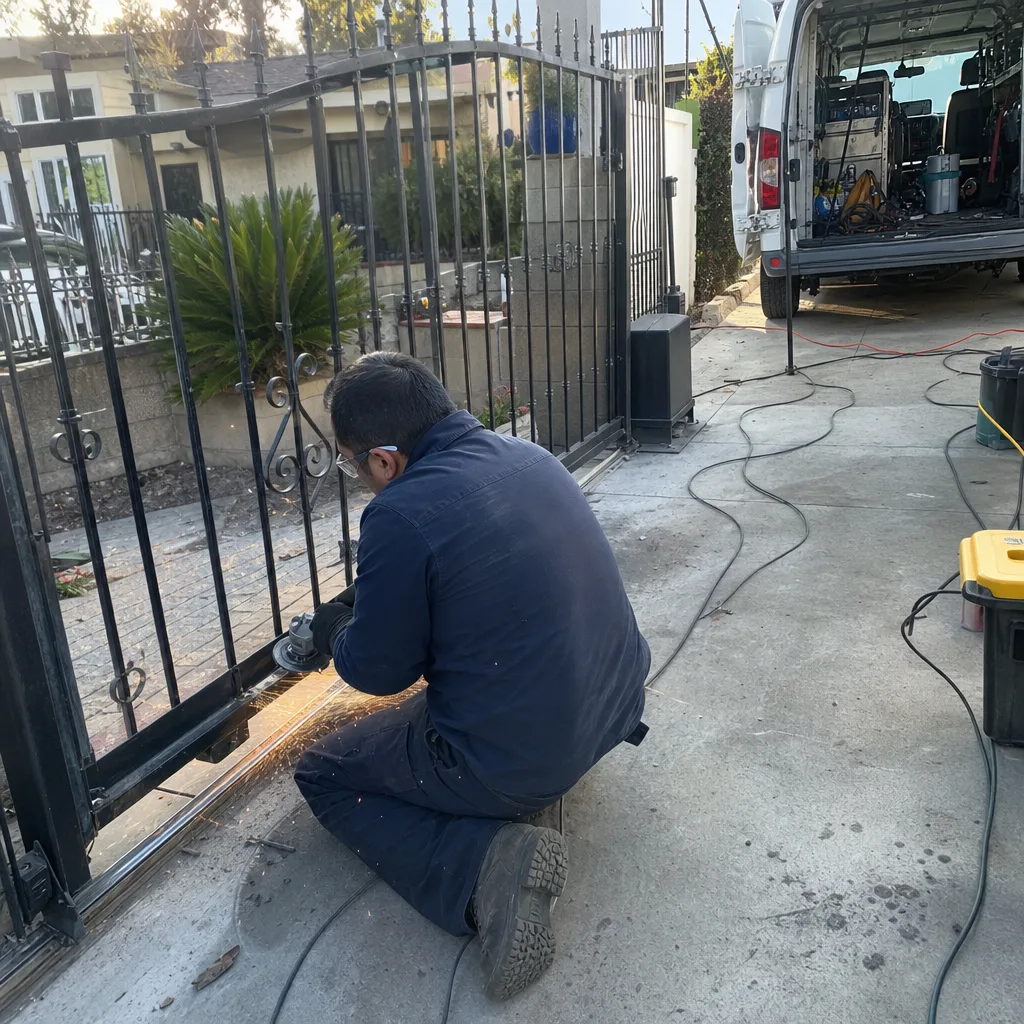
Sometimes repair is cheaper now and more expensive over three years. Sometimes replacement is more expensive now and cheaper over three years. The trick is knowing which situation you’re in.
When Repair Wins
If the operator is under five years old, the motor runs quiet, and the board failure was caused by a power surge (not moisture intrusion), repair usually wins. A $300 control board swap on a healthy operator is almost always smarter than a $1,100 replacement. The rest of the unit has years of life left, and the new board resets the clock.
When Replacement Wins
If the operator is over eight years old, has been repaired twice, and the most recent failure is the same component that failed before, replacement is usually the better three-year bet. Here’s the math:
- Repeated repair path: Year 1 control board ($350). Year 2 limit switch plus arm bracket ($275). Year 3 motor begins grinding and needs a full replacement ($1,100). Total over three years: $1,725, plus three service visits, three scheduling days, three diagnostic fees.
- Replacement now: New operator installed and documented ($1,100). Zero repair calls for three to five years under normal conditions. Total over three years: $1,100, one visit, one day of inconvenience.
The hard part is knowing which path you’re on. That’s where honest diagnostic work comes in. A technician who tells you the truth, that the unit has one more good failure left in it, or that this is the second time we’re seeing the same board, gives you the information you need to make the three-year decision. A technician who just fixes whatever is in front of them and leaves doesn’t.
How to Read an Itemized Estimate (And What a Lump-Sum Quote Hides)
A written, itemized estimate looks like this:
- Diagnostic: $125 (flat, includes on-site inspection and written findings)
- Part: DoorKing control board, Model 6050, $340 (includes parts markup)
- Repair labor: 1.5 hours at $120/hour, $180 (includes removal of old board, installation of new board, wiring verification, limit setting, operational testing)
- Documentation: $0 (photo record of old board, new board, limit-switch readings, part number, included in labor)
- Total: $645
A lump-sum quote looks like this:
- “Gate repair, all in”: $650
Same price, completely different information. The itemized version tells you the part number, so you can verify the board costs $210 to $260 wholesale and the $340 line item is reasonable. It tells you the labor rate, so you know you’re paying a standard Garden Grove rate. It tells you the diagnostic is flat, so you know you’re not paying $120 an hour for the technician to scratch his head.
The lump-sum version tells you none of this. And when the repair fails in six months and you call back, the lump-sum company has no record of what part they installed, when they installed it, or what the limit switch was set to. The warranty claim becomes a he-said-she-said argument. The itemized company has a photo of the board, the part number, the date, and the readings. That’s the difference between a warranty that’s honored and a warranty that’s argued.
Our company, Vance Gate Repair, operates under a written standard we call The Haven Standard. Clause 1: have it in writing. The written price is handed over before any work starts. Clause 4: evidence on every job. A documented photo record on every visit, at no additional charge. This isn’t marketing language. It’s the way Adrian Vance ran commercial access-control sites starting in 2014, where a missing wiring diagram meant a failed inspection and a lost contract. The habit carried over to residential work because it’s simply the right way to document a repair.
The Garden Grove Factor: Climate, Soil, and Gate Wear Patterns
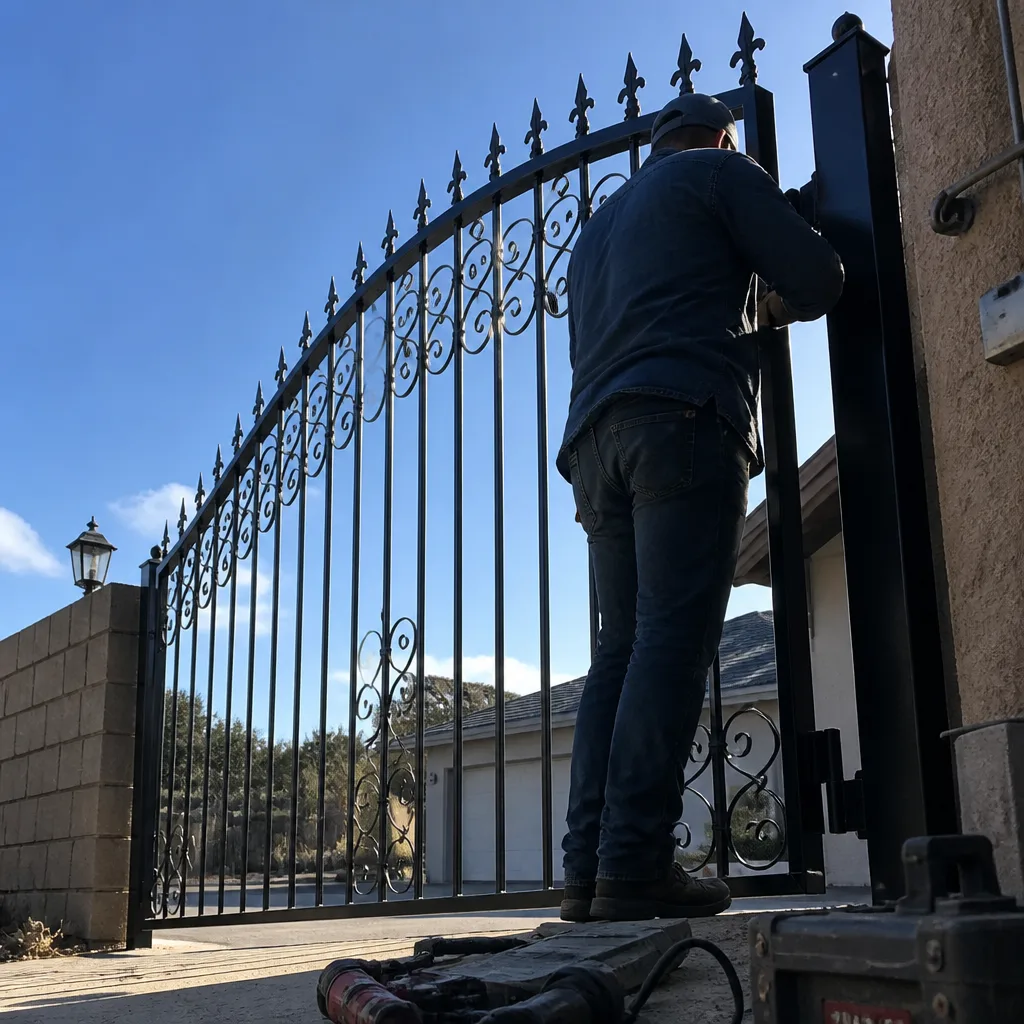
Garden Grove has a specific set of conditions that affect gate longevity and repair frequency. Understanding them helps you anticipate costs and maintain your gate proactively. For more guides & resources, explore our blog.
The dry-season/wet-season cycle. Garden Grove summers are long and dry; winters bring rain in concentrated bursts. This cycle stresses every exterior component: metal expands in the heat, contracts when the rain arrives, and the cycle repeats year after year. Control boards that sit inside operator housings bake in the summer sun, reaching internal temperatures well above ambient. When rain arrives, the housing cools rapidly, creating condensation inside. This is why we see a spike in control board failures in Garden Grove during the first heavy rain after a long dry stretch.
Soil movement. Garden Grove neighborhoods with older concrete gate posts settle over time. The combination of clay-heavy soil and seasonal moisture change causes posts to shift, sometimes by fractions of an inch. That slight shift is enough to throw a gate out of square, straining hinges and forcing the motor to work harder. A gate that closes fine in July might drag by November. The repair is often hinge adjustment or post re-shimming, not a motor problem, but a technician has to understand the soil pattern to diagnose it correctly.
Salt air, even inland. Garden Grove is about seven miles from the coast. That’s close enough for salt air to accelerate corrosion on non-powder-coated steel, especially in the western parts of the city. We see rusted hinge pins and corroded control board terminals on gates that are otherwise structurally sound. The fix is usually replacing the rusted hardware with coated components, but it requires a technician who can tell the difference between surface rust (cosmetic) and structural rust (a hinge that’s about to fail).
The Real Cost of the Cheapest Quote: Re-Service Rates in Garden Grove
The cheapest quote is rarely the cheapest repair. Here’s what we’ve observed in Garden Grove over eleven years of gate work:
When a low-bid repair fails within 90 days, the original contractor is often unreachable. The phone number rings to voicemail. The technician who showed up was a subcontractor, not an employee. The company has no physical address in Garden Grove, or it operates under a DBA that changed names. The homeowner calls another company, pays another diagnostic fee, and pays for the same repair again.
Here’s the documented pattern of what a failed cheap repair costs:
- Initial low-bid repair: $220 for a hinge replacement that didn’t address the sagging post. The gate closes for six weeks, then drags again.
- Second diagnostic visit: $125 to the new company. The new technician finds the post was shifted, not just the hinges.
- Correct repair: $450 for post re-shimming, hinge replacement, and proper limit resetting.
- Total cost to fix what should have been a $450 job the first time: $795, plus three scheduling days, plus two missed afternoons of work.
- Plus the original $220: $1,015 for a repair that should have cost $450 and been done right the first day.
This is not hypothetical. We’ve seen this exact sequence dozens of times in Garden Grove neighborhoods. The cheapest quote isn’t the cheapest when the company behind it disappears. And companies that underbid gate work tend to disappear because they can’t stay in business charging below the real cost of doing the job properly.
What does a real gate company look like? It has a physical presence, a named owner, a warranty that covers the work, and a record of the repair. Our Vance Gate Repair Garden Grove home page has the owner’s name on it: Adrian Vance. Our technicians are background-checked and uniformed. Every job leaves a written record. If a company’s website doesn’t show a name, a license, or a physical address in the area, that’s a signal worth paying attention to.
Common Mistakes to Avoid
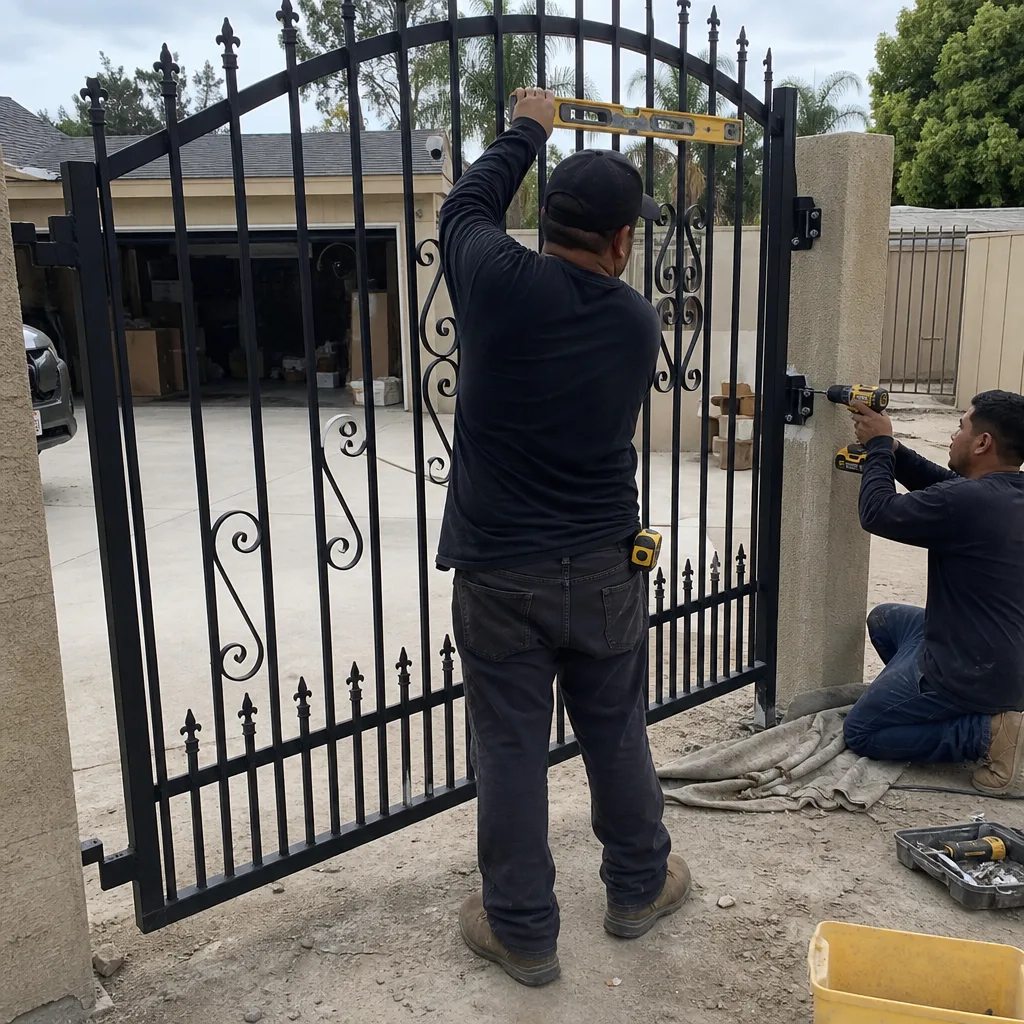
- Accepting a lump-sum quote without line items. A quote that says “$650 all in” should be followed by a simple question: “What’s the breakdown?” If the answer is vague, walk away. An itemized estimate is the difference between a checkable price and a guess.
- Paying diagnostic time on top of a trip charge without knowing which is which. Some companies in Garden Grove charge a trip charge, a diagnostic fee, and an hourly rate all stacked. That’s paying three times for the same hour. Diagnostic work is real labor, but it should be one line item, not three.
- Replacing an operator when only the board failed. This is the single most common up-sell in gate repair. A company quotes $1,400 for a new motor when the board is a $340 part. Boards fail independently of motors all the time. Ask why the entire operator needs replacing when the board can be swapped. If the answer doesn’t make sense, get a second opinion. We offer a free second opinion on any written estimate from another company.
- Ignoring a dragging gate until the motor burns out. A gate that drags on the ground for six months is a motor failure waiting to happen. The strain on the operator is cumulative; by the time the motor dies, the hinges are usually ruined too. Fixing the drag early costs $150 to $300. Fixing it after the motor burns out costs $900 to $1,800.
- Not asking what documentation you’ll receive. A repair with no record is a repair that can’t be verified. If the company can’t tell you what you’ll get, whether it’s a photo log, a written part number, a dated receipt with serial numbers, you’re buying a repair you can’t prove happened.
- Choosing the cheapest quote without checking the company’s legitimacy. The cheapest quote in Garden Grove almost always comes from the company with the least overhead, and sometimes that means no insurance, no licensing, no physical address. You’re betting your gate and your safety that a transient operator will honor a warranty. That’s a bad bet.
When to Call a Professional
Gate operators run on 120-volt or 240-volt power. The springs and arms on a swing gate are under constant mechanical tension. A gate that falls off its track can weigh hundreds of pounds. If your gate is making a grinding noise, opening unevenly, or reversing unexpectedly, call a professional before someone gets hurt. If the photo-eye isn’t stopping the gate when something crosses the path, that’s a safety system failure and it needs attention now. If you’re looking at a full operator replacement or gate installation in Garden Grove, written pricing before work starts is the standard you should expect. Our company, Vance Gate Repair Garden Grove, offers free estimates in Garden Grove and every estimate includes a written price, a documented record, and the 365-Day Done Right Promise: if the repair is not right, the company makes it right, no argument, no fee. Call (657) 837-6867 to schedule.
Frequently Asked Questions
Gate repair in Garden Grove typically runs between $185 and $1,900, with most common repairs (control boards, hinge sets, photo-eye realignment) landing between $220 and $550. The final price depends on the part, the labor, and the diagnostic time. Written itemized estimates should separate all three. Call (657) 837-6867 for a free estimate on your specific gate.
The difference is usually in the line items: one company is pricing a name-brand part with proper markup and real labor hours, while the other is pricing a generic part, skimping on diagnostic time, or padding parts markup to make the labor look cheaper. Itemized quotes reveal the difference. A $400 spread on the same repair is a signal to compare the estimates line by line.
For repairs, yes, a live person answers the phone 24 hours a day at (657) 837-6867 and same-day service is available in most Garden Grove cases. Emergency situations, a gate that won’t close, a gate that’s fallen off its track, are prioritized. For installations and new operator work, scheduling is measured and a written quote is provided before any date is set.
Diagnostic labor covers the technician’s time on site identifying what failed. It should be a flat rate, typically $85 to $150 in Garden Grove, separate from repair labor, and it should include written findings. Some companies roll diagnostic work into a “trip charge” and then charge an hourly rate for the same time, which means you’re paying twice for one hour.
Usually not, if the operator has been repaired before. An eight-year-old operator with a history of failures is likely to fail again within a year. Compare the cost of one more repair (often $350 to $600) against a replacement ($650 to $1,900) over a three-year window. If the three-year tally is higher than replacing now, the repair isn’t a bargain. A good diagnostic technician will tell you which side of that line you’re on.
Any automated gate should have a functioning photo-eye, the infrared beam that stops the gate if something crosses its path, and an operational automatic reverse function. After a repair, the technician should test both safety features and document the settings. If your gate doesn’t stop when something crosses the beam path, the repair isn’t complete. Call (657) 837-6867 to have it checked.
The Bottom Line
Gate repair costs in Garden Grove in 2026 break down into three components: parts, labor, and diagnostic time. Once you know what each line item should look like, you can verify any quote, compare estimates honestly, and avoid paying for opacity. The cheapest quote is only cheap if the company behind it is still there when the repair fails. The smartest money goes to the company that writes the price down before the work starts, leaves a documented record when it’s done, and stands behind the repair with a real warranty. That’s the standard every Garden Grove homeowner should expect.
Written by Adrian Vance, Owner at Vance Gate Repair Garden Grove, serving Garden Grove since 2014.