
Last updated September 20, 2026
Free on-site gate assessment - hinges, posts, and your LiftMaster or Nice gate operator checked before anything is quoted
The assessment is free and the quote is the invoice.


 Before
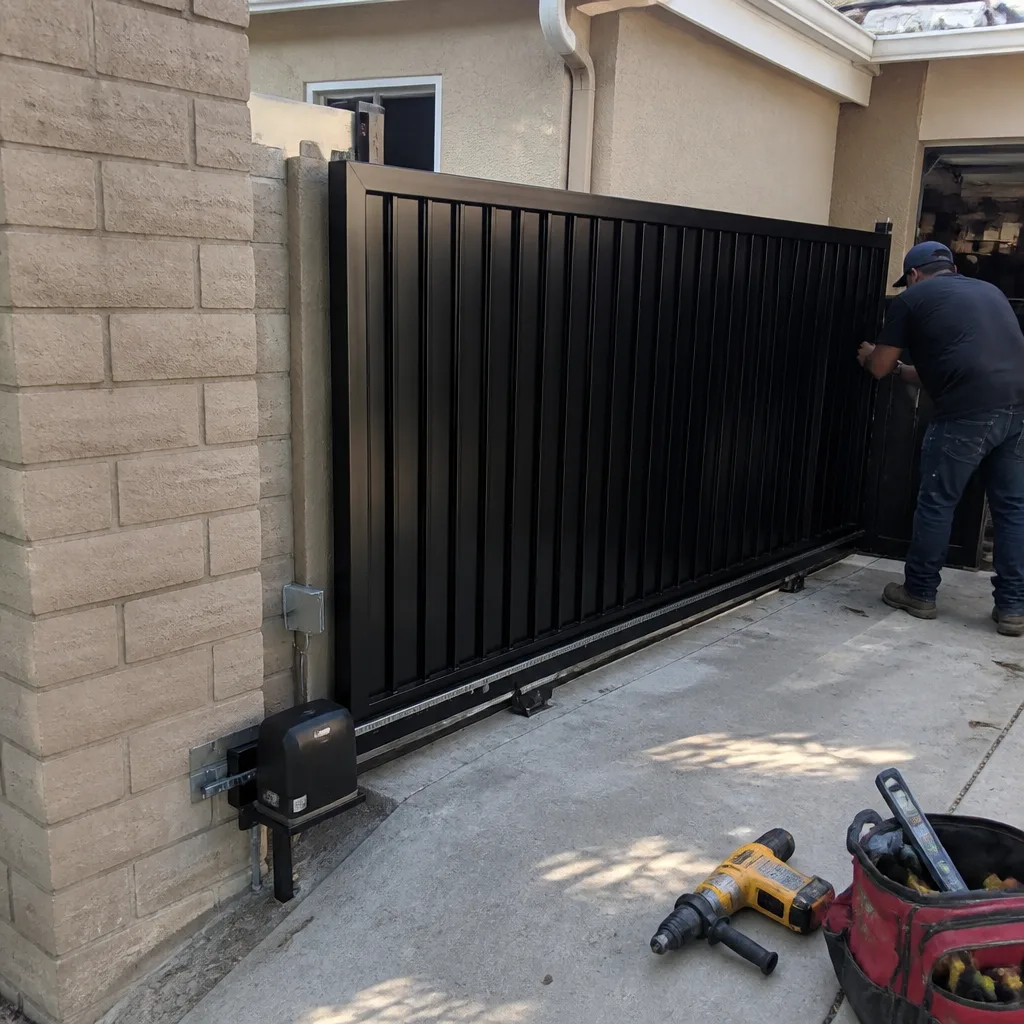 After
After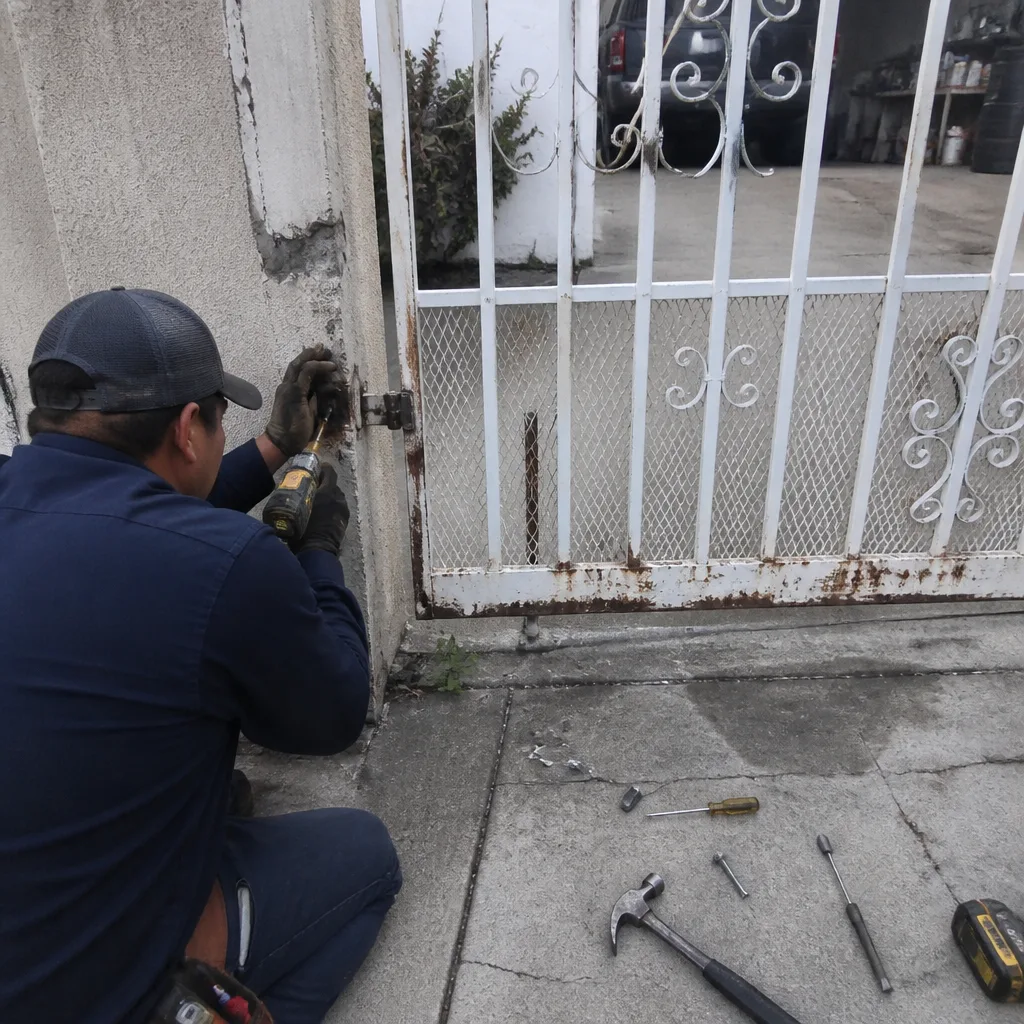 Before
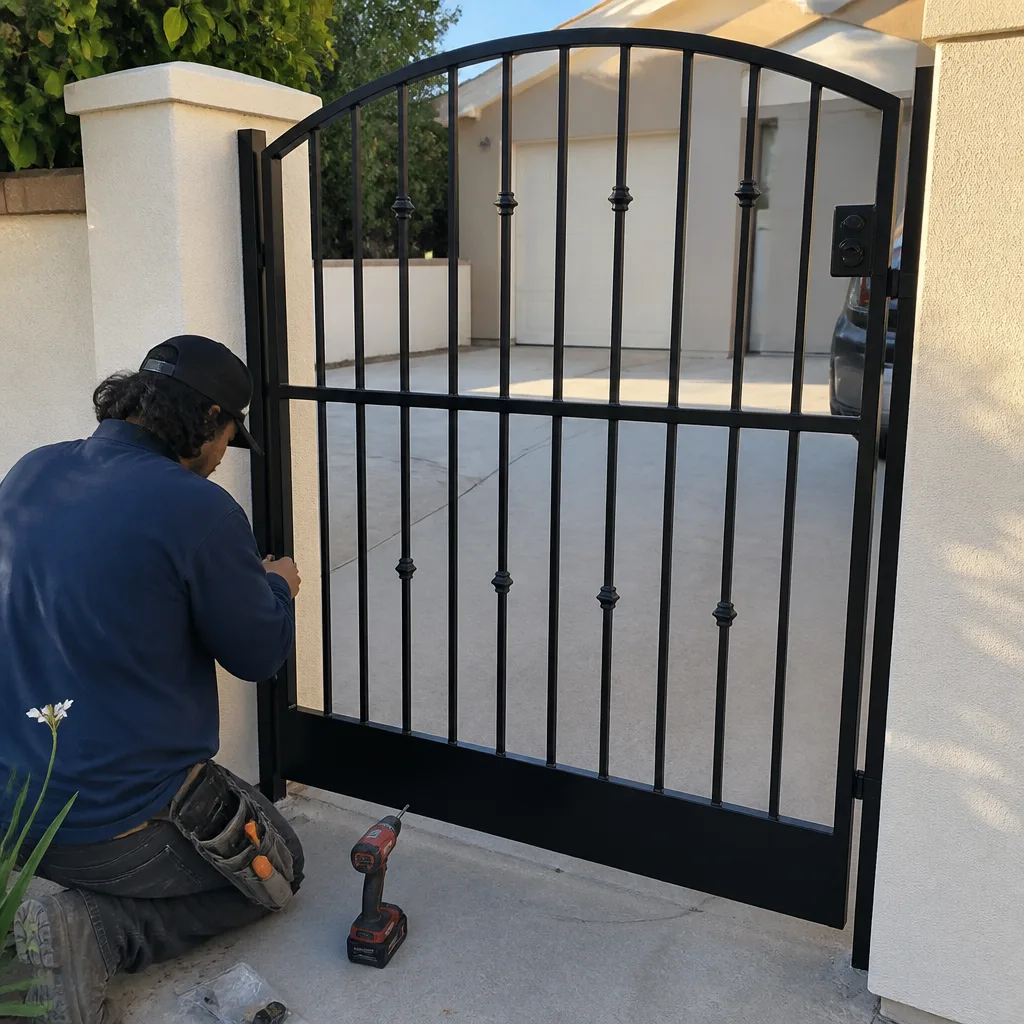 After
After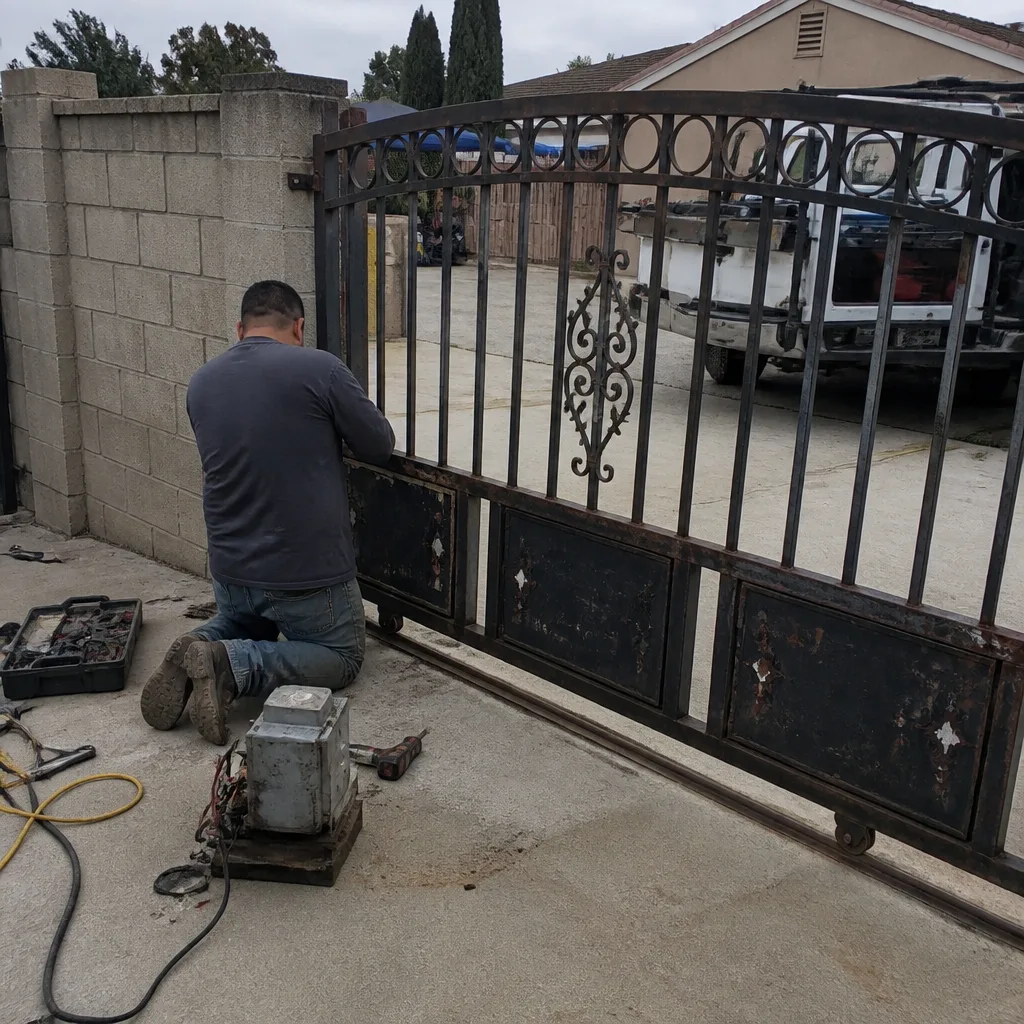 Before
 After
AfterGate Repair Warning Signs: A Garden Grove Homeowner’s Reference Guide
A gate that hesitates two seconds before moving is not “warming up.” It’s a motor drawing excess current to overcome resistance, and the component causing that resistance will fail completely within weeks. Most Garden Grove homeowners don’t get surprised by a dead gate. They get surprised because they spent months dismissing the evidence. This guide names each warning sign, maps it to the likely cause, and assigns an urgency rating so you can act before the gate strands your car in the driveway and your day in the gutter. By the end, you’ll know which sounds mean “call tomorrow” and which sounds mean “call now.”
Quick Answer
The most common gate repair warning signs in Garden Grove are a gate that hesitates or slows before moving, grinding or clicking sounds from the motor, a gate that reverses direction unexpectedly, sagging or dragging near the latch post, and a motor that hums but doesn’t turn. If you notice any of these, consider our Gate Repair services before the damage worsens. Any of these means a component is failing. None of them fix themselves.
Table of Contents
- Hesitation: The First 12 Inches Tell You Everything
- Sound Mapping: Grinding, Clicking, and Humming Under Load
- Reversing, Stopping, and Other Safety-System Failures
- Sagging Gates and Dragging Wheels: Mechanical Wear You Can See
- Works Manually, Fails Under Power: What That Distinction Means
- What to Document Before You Call a Technician
- Urgency Ratings: Days Versus Months
- Garden Grove Specifics: Climate, Soil, and Code
BeforeAfterHesitation: The First 12 Inches Tell You Everything
A gate should begin moving within half a second of the motor engaging. If there’s a pause, a stutter, or a slow grind into motion, something is resisting the start. The first 12 inches of travel is where a gate reveals its mechanical condition, because that’s when the motor works hardest: overcoming inertia, releasing the brake, and fighting whatever friction has built up in the hinges, wheels, or track. We’ve opened motors in Garden Grove where the capacitor was so degraded the armature barely turned, and the homeowner had been living with a two-second delay for six months. That delay was the capacitor failing. The replacement was $60. The wait made it a motor replacement.
Here’s what to watch during that first foot of travel:
- Smooth start, steady speed: Good signs. The motor, capacitor, and drive train are cooperating.
- Hesitation then normal movement: Capacitor is weak or the gear train has excess friction. Days to weeks before failure.
- Hesitation then slow, labored movement the whole way: Resistance somewhere mechanical. Could be rollers, hinges, a bent track, or a failing motor bearing. Weeks, maybe less.
- Hesitation then sudden lurch: Something is binding and then releasing. Often a wheel off its track or a hinge pin starting to seize. The lurch is the motor overcoming the bind. This is days-level urgency.
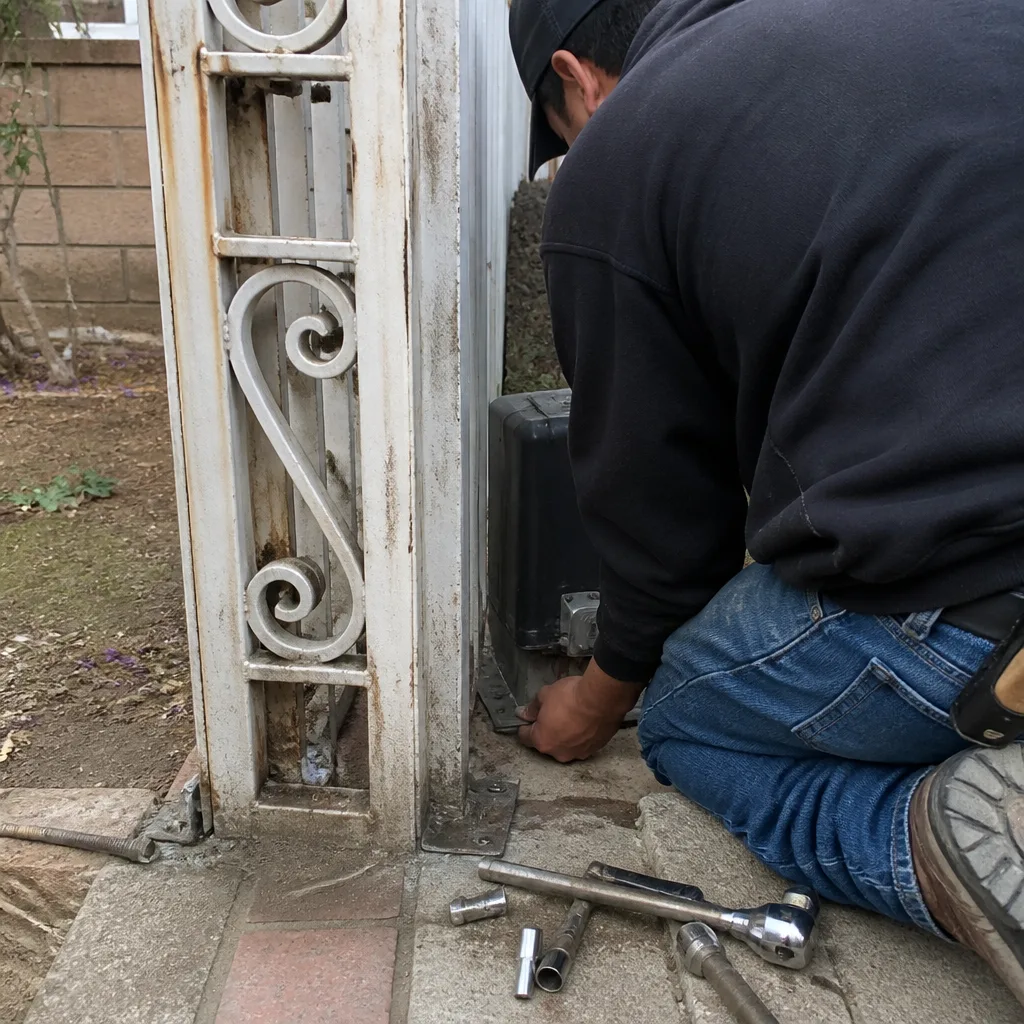
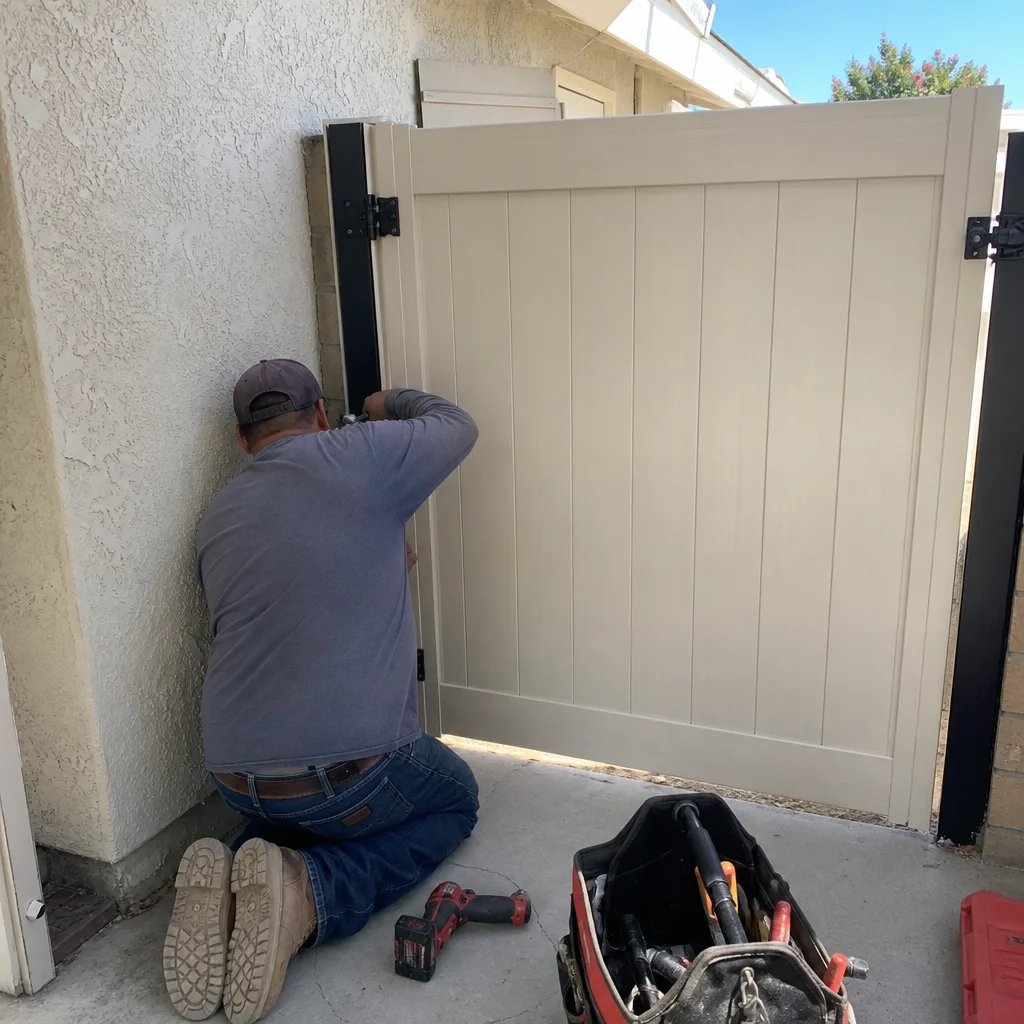
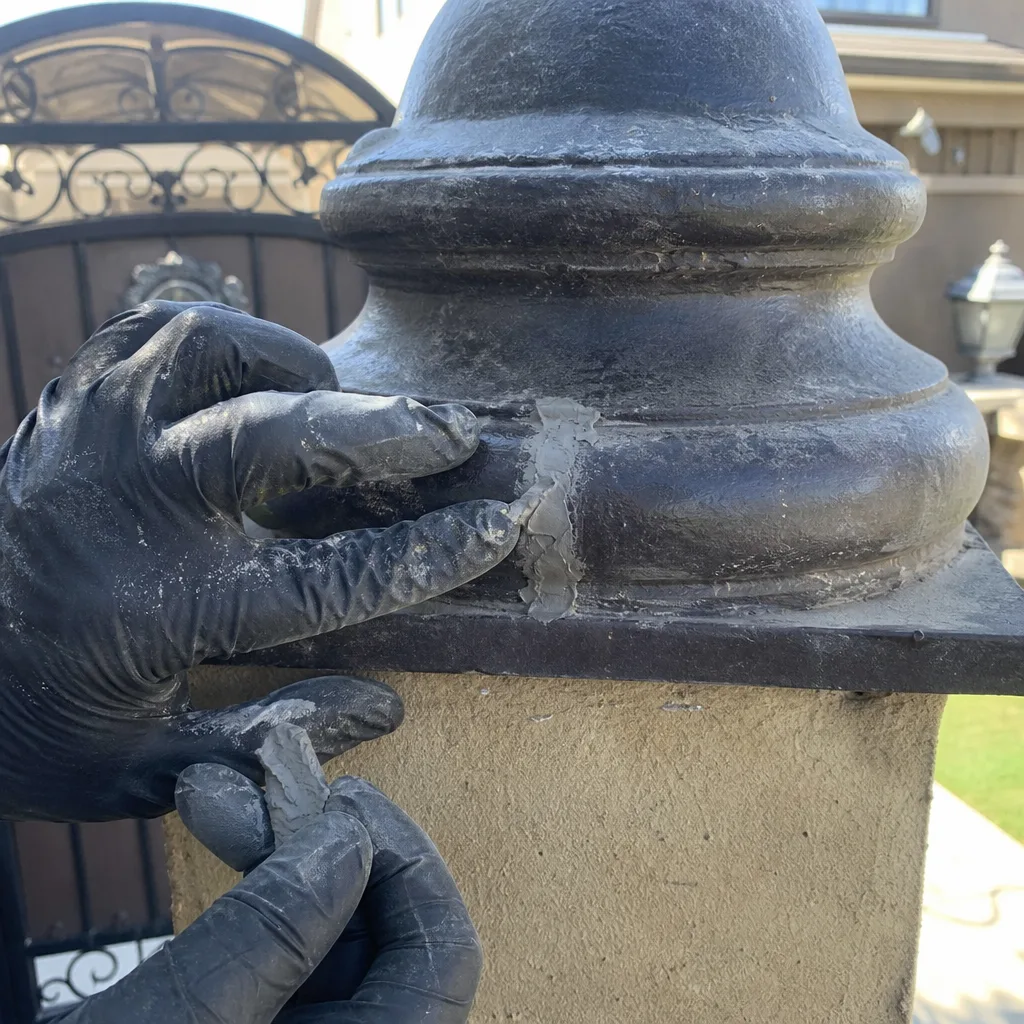
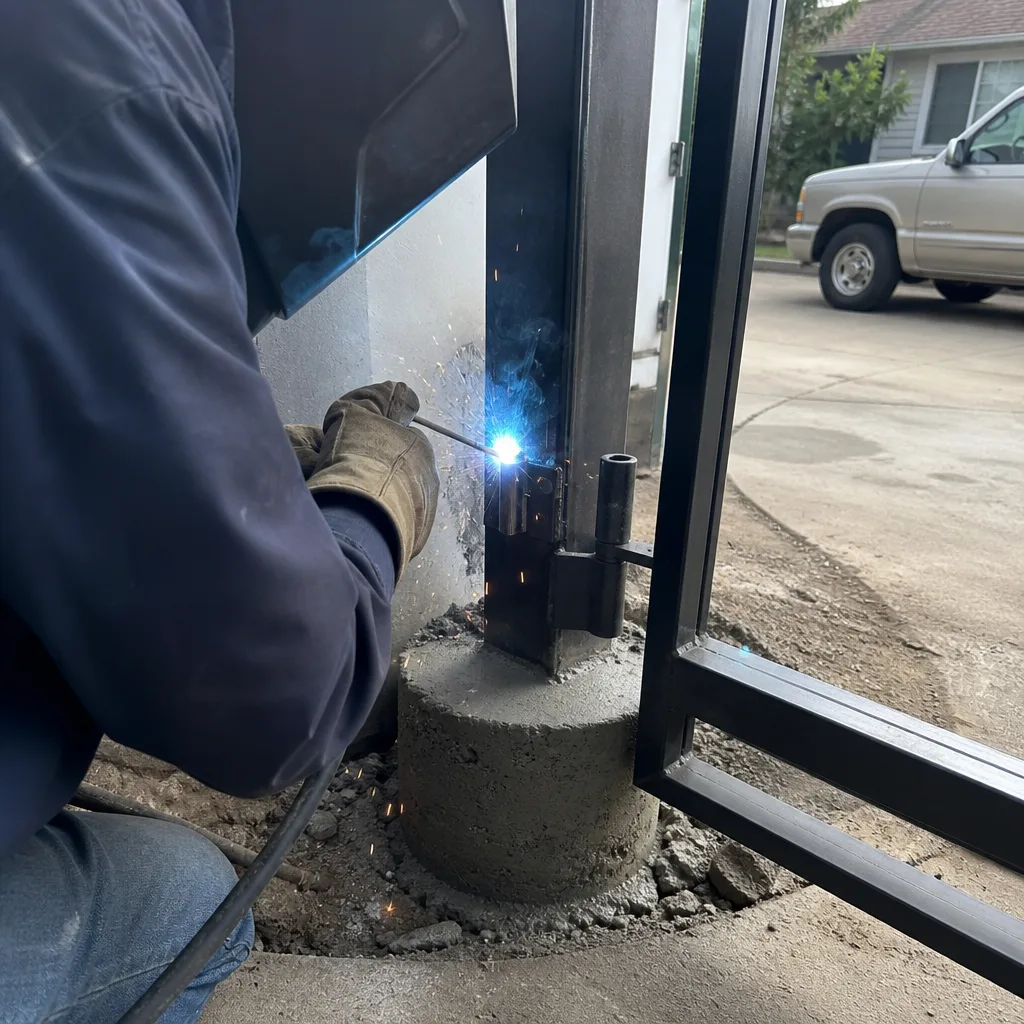
In Garden Grove, where many homes have swing gates on mild slopes, a lurching start often traces back to a gate that’s out of plumb, putting uneven load on the bottom hinge. The fix may be as simple as re-hanging the gate leaf or as involved as welding a new hinge bracket. Either way, the evidence is visible. A technician who documents what they find, with photos of the hinge before and after adjustment, gives you a record that matters if the symptom returns.
Sound Mapping: Grinding, Clicking, and Humming Under Load
Gate motors make noise. Normal operation is a low, even whir or a steady chain-drive rattle. Abnormal noise is diagnostic. Each sound corresponds to a component, and being able to describe the sound accurately to a technician over the phone can shorten the visit by an hour. Here’s the map we use on every service call in Garden Grove.
Grinding while moving: This is metal-on-metal contact inside the gearbox or along the drive train. Inside the operator, the worm gear and drive gear are made of steel and bronze respectively. When lubrication fails or a bearing wears, the bronze gear sheds metal dust and the sound turns gritty. Outside the motor, a grinding sound near the ground often means a roller has seized and the gate is dragging it across the surface. If the grinding is steady and from the motor: odds are the gearbox. If it’s intermittent and from below: check the wheels first.
Clicking when the motor should be running: A rapid click-click-click from the control board usually means a relay is trying to engage but the motor isn’t drawing properly. Causes include a blown capacitor, a seized motor, or a wiring fault. A single click when you press the remote but no movement often points to a failed start capacitor. This is a classic LiftMaster and FAAC symptom, and it’s frequently misdiagnosed as a dead board when the capacitor is the actual culprit. A $50 part instead of a $400 board. The distinction matters.
Humming under load but no movement: The motor is receiving power but can’t turn. This is the most dangerous warning sign in this guide, because a stalled motor drawing current heats up fast. The humming means the capacitor is trying to start the motor and failing. Causes include a bound gear, an obstruction in the track, or a gate that has settled and wedged itself against the stop. Shut the gate off at the breaker if you hear this. The humming component is overheating every second it continues.
Squealing during travel: A high-pitched squeal usually means a belt slipping on a pulley or a dry bearing spinning its outer race. On a BFT or Viking operator, belt tension is adjustable. On a chain-drive system, lack of lubrication sounds more like a groan than a squeal. Squealing is a progressive-wear sound; it won’t strand you tomorrow, but it will take out a pulley if ignored for months.
Describe what you hear, when you hear it, and where it’s coming from. A homeowner who says “it grinds near the ground on the opening pass” gives us a target. A homeowner who says “it makes a bad sound” gives us a search.
Reversing, Stopping, and Other Safety-System Failures
A gate that starts to open, then stops and reverses, is doing exactly what it’s designed to do when something trips a safety input. The most common trigger in Garden Grove is the photo-eye, the infrared beam that detects anything in the gate’s path. In our climate, the issue is rarely the beam itself; it’s alignment. The sun sits low in the winter months and can blind a photo-eye that points west. A gate that reverses reliably every afternoon between 4 and 6 p.m. is not haunted. It’s the sun hitting the receiver.
Other safety system failures include:
- Photo-eye misalignment: A photo-eye off by as little as two inches can break the beam. Symptom: gate starts, travels a few feet, stops, reverses. Check for a blinking indicator LED on the eye itself; a solid LED usually means alignment is fine.
- Edge sensor failure: Gates with reversing edges (the rubber strip along the leading edge) will reverse if the edge sensor detects pressure. A failing edge sensor can trigger reverses without any pressure. Symptom: gate reverses at the same spot every time.
- Force adjustment drift: If the operator’s force sensitivity is set too low, the gate may reverse because it interprets normal resistance as an obstruction. This is a settings issue, not a hardware failure. Symptom: gate reverses intermittently, with no pattern tied to time of day or gate position.
- Loop detector fault: Underground loop detectors tell the gate to stay open when a car is present. A failing loop can cause the gate to close on a car or refuse to close at all. Symptom: gate behaves differently when a car is parked nearby than when the driveway is empty.
The critical diagnostic question is whether the gate reverses at the same point every time or at random points. Same point means a sensor or alignment issue. Random points means an intermittent electrical fault or a force-setting problem. Both are repairable. Neither is a motor replacement, but a technician who doesn’t ask the question might sell you one anyway.
Sagging Gates and Dragging Wheels: Mechanical Wear You Can See
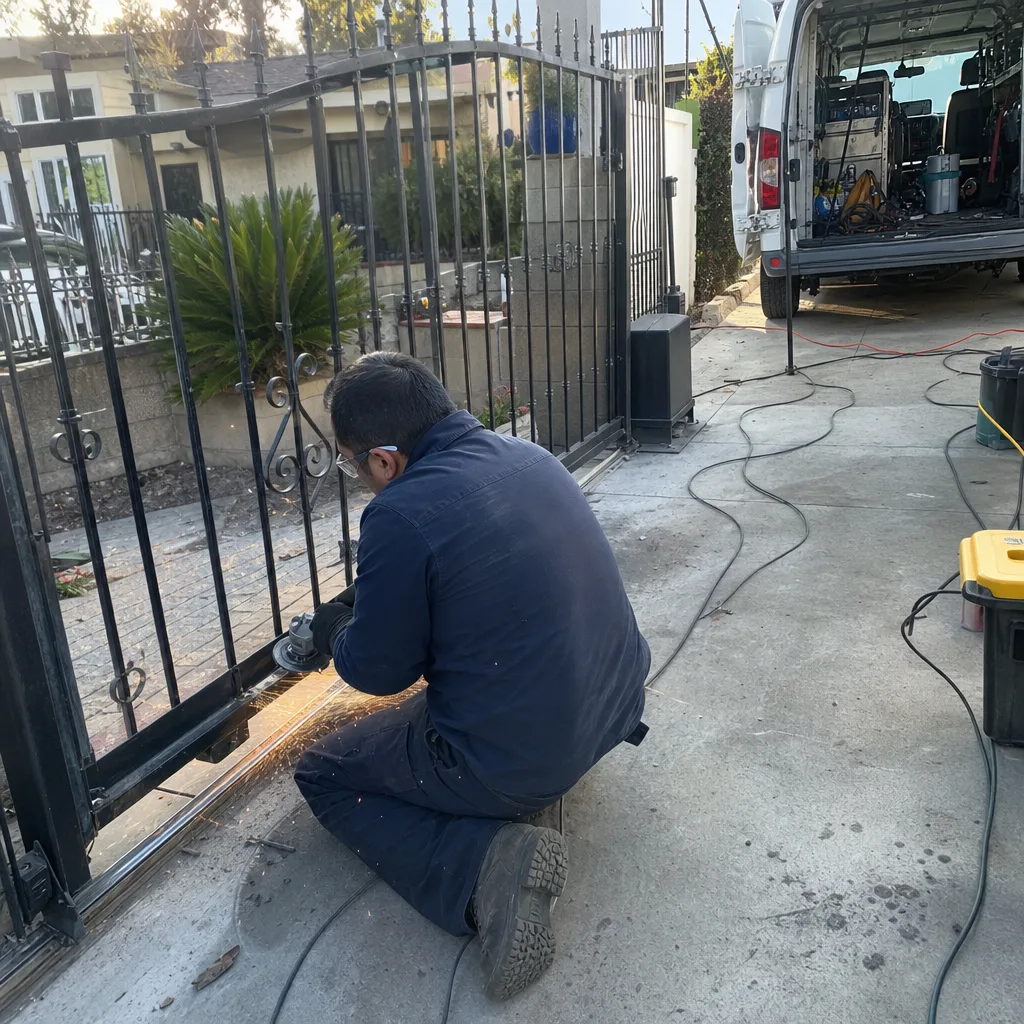
Some warning signs don’t require listening. They’re visible from the car window as you pull in. A gate that sags toward the latch post, a wheel that leaves a groove in the concrete, a gap at the top hinge that wasn’t there last year. These are mechanical failures waiting to become electrical failures, because a sagging gate puts load on the motor that the motor was never designed to carry. The motor burns itself out trying to lift a gate that gravity is winning against.
In Garden Grove, where many gates are powder-coated steel or ornamental iron, the signs are specific:
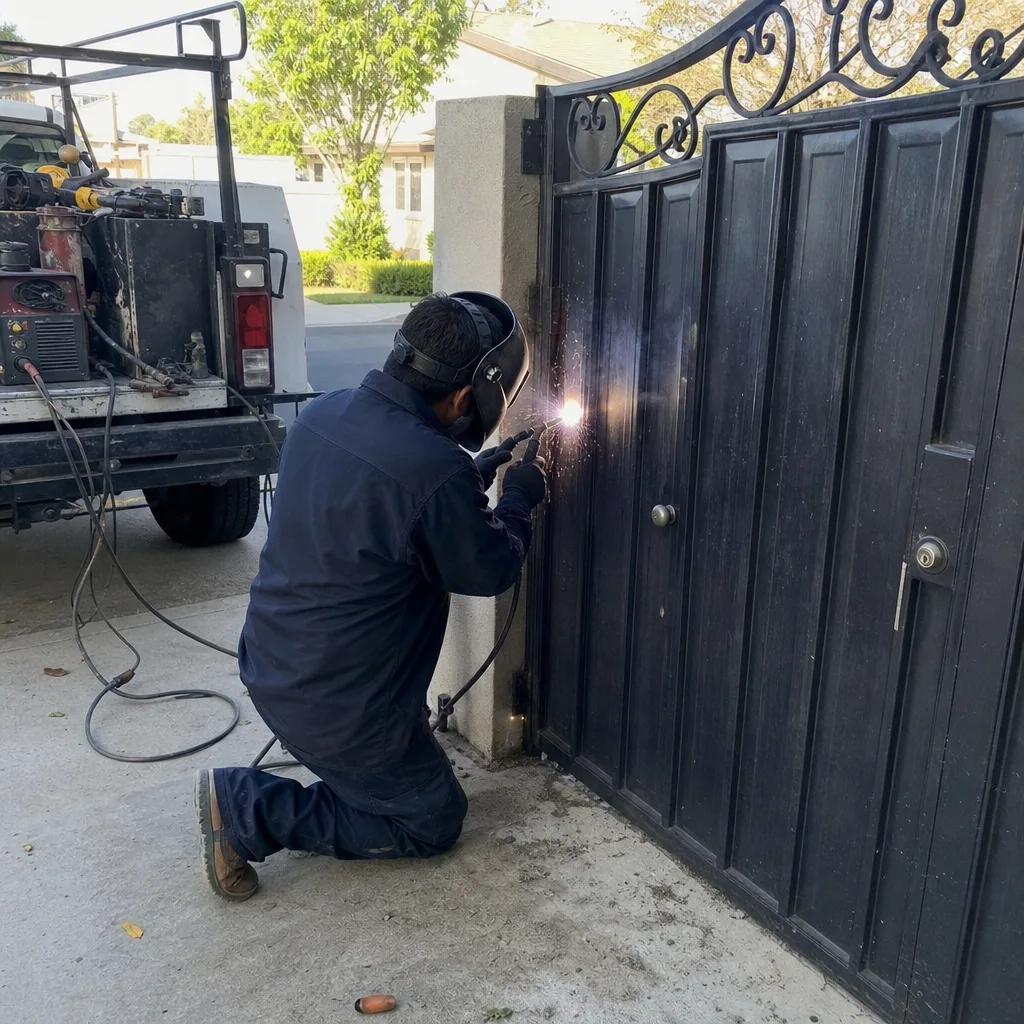
- Diagonal crack in the metal near a hinge: This is fatigue. The metal is flexing with every cycle and has finally cracked. Welding can repair it if caught early; if the crack extends through a hinge point, the gate leaf may need replacement. Repainting won’t fix it.
- Groove worn in the driveway surface: The gate is dragging a wheel. The wheel has stopped rolling and is now sliding. That’s friction, which means heat, which means wear on the wheel bearing, the axle, and the gate structure.
- Gap at the top hinge wider than an eighth of an inch: The hinge pin is wearing or the post is leaning. Either way, the gate’s weight is shifting. A leaning post in Garden Grove clay soil is common; the soil expands and contracts with moisture, and over years the post migrates.
- Latch that no longer aligns: The gate has settled. The latch post and the gate leaf are no longer in the same plane. Forcing the latch closed by hand is a temporary fix that accelerates the wear.
Wheels, hinges, and posts are all mechanical components with finite lives. A gate that cycles eight times a day in Garden Grove goes through nearly 3,000 cycles a year. At five years, that’s 15,000 cycles. Most residential gate hardware is rated for 10,000 to 20,000 cycles. The math explains why so many gates start sagging at the five-to-seven-year mark. It’s not a defect. It’s a duty cycle reaching its end.
Works Manually, Fails Under Power: What That Distinction Means
This is the single most useful diagnostic distinction in gate repair, and most homeowners never make it. If you can release the operator and swing the gate manually without binding, but the gate strains or fails under motor power, the problem is not mechanical. The gate structure, hinges, and wheels are fine. The issue is in the operator, the electrical supply, or the safety system.
Here’s how to run the test: find the manual release on your operator (usually a handle or a key), disengage the motor, and push the gate through its full travel. Note whether it moves smoothly in both directions. Then re-engage and try it under power. If the manual pass is easy and the powered pass is labored, you’ve narrowed the problem significantly.
The likely culprits when a gate moves freely but fails under power:
- Weak start capacitor: The motor can’t get enough initial torque. This is common on LiftMaster, FAAC, and Linear operators after five-plus years. The capacitor is a $40-$80 part.
- Low voltage at the motor: Garden Grove homes with long wire runs from the house to the gate can experience voltage drop. The motor needs a certain minimum voltage to start; if the run is undersized or a splice has corroded, the motor starves. A technician with a multimeter can confirm this in five minutes.
- Force sensitivity set too low: The operator thinks it’s hitting an obstruction and backs off. This is a programming issue, not a parts issue.
- Failed limit switch: The gate doesn’t know where to stop, so it strains against the stop point, drawing excess current, and the overload protection trips. The motor is fine; the switch is dead.
This distinction changes the repair entirely. A motor replacement on a LiftMaster unit can run $800-$1,200 parts and labor. A capacitor replacement is a fraction of that. A technician who tells you “the motor’s shot” without testing the manual pass and the capacitor first is guessing. The Haven Standard exists to eliminate that guessing: a written diagnosis, a written price, and a photo record of what was measured and what was found. For more on finding qualified help, see How to Hire a Gate Repair Contractor in Garden Grove: A Step-by-Step Guide.
What to Document Before You Call a Technician
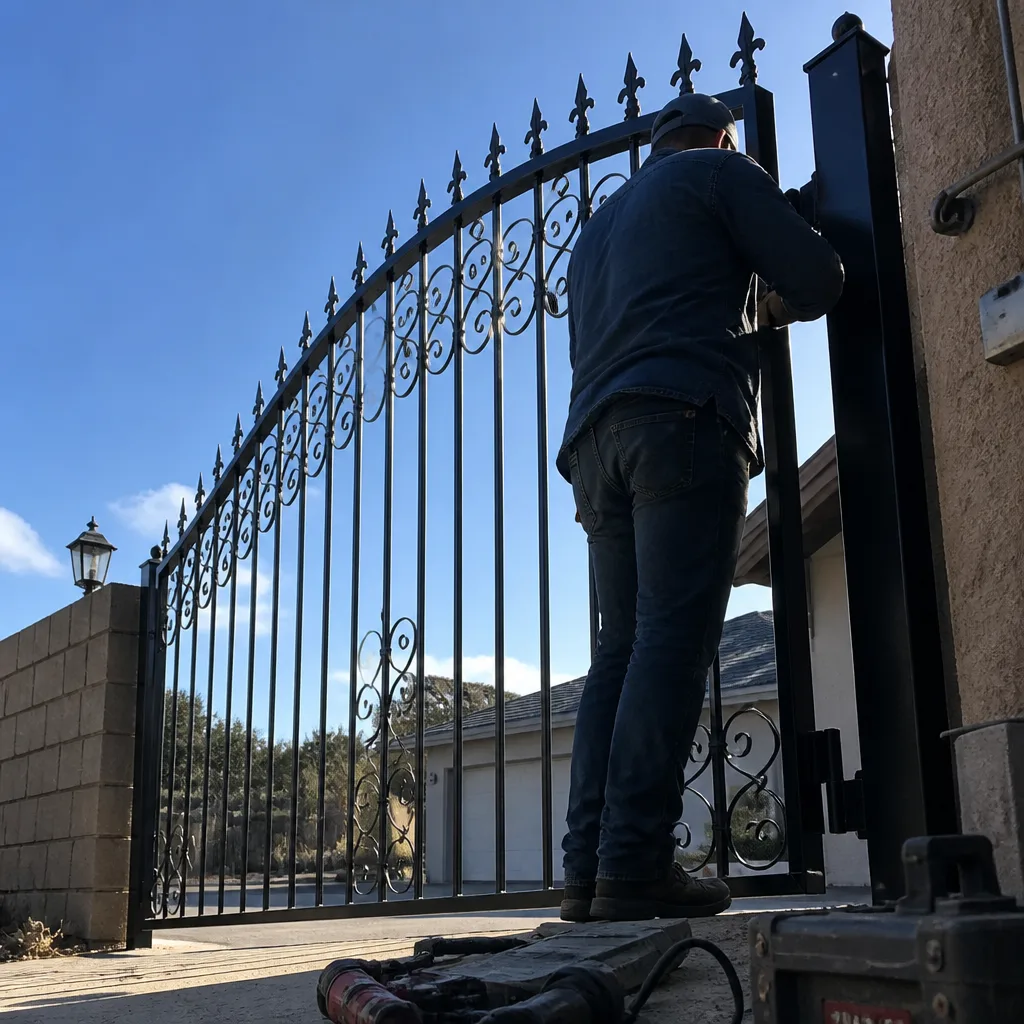
You don’t need to be a technician to gather evidence. You need a phone camera and five minutes. The homeowners who get the fastest, most accurate diagnoses are the ones who document the symptom while it’s happening. Here’s what to capture before you pick up the phone.
Video the gate in motion. A 15-second clip of the gate opening and closing normally beats a 15-minute verbal description. Show the whole gate, not just the motor, and capture any sound clearly. If the gate hesitates, fails, or reverses, film that too. We’ve diagnosed a failing capacitor from a 10-second video a homeowner texted from her driveway in Garden Grove before we ever rolled a truck.
Note the time of day and weather. A gate that fails only in the afternoon sun has a photo-eye alignment problem. A gate that fails only after rain has a moisture issue, probably in a junction box or a splice buried near the gate post. Garden Grove’s wet winter months, as mild as they are, create enough moisture to matter.
Record the sound. Use your phone’s voice memo. Grinding, clicking, humming, squealing. Each sound is a different component, and being able to play it for a technician is faster than describing it.
Photograph the gate from both sides. Hinge gaps, wheel condition, track alignment, rust at the base of the posts. Half the diagnosis is in these photos before the tech ever touches the gate.
Note when it last worked perfectly. If the gate worked fine yesterday and failed today, that’s a different diagnostic path than a gate that has been degrading over weeks. Sudden failures usually point to electrical components. Progressive failures point to mechanical wear.
Documentation also protects you from paying twice. If a technician opens your operator, replaces a part, and the gate fails again two weeks later, the next technician benefits from knowing what was already done. A company that leaves you a written record of the part number, the adjustment made, and the before-and-after photos, protects you from that from day one. That’s Gate Repair in Garden Grove done the way it should be.
Urgency Ratings: Days Versus Months
Not every warning sign is an emergency. Knowing which ones are buys you time and prevents panic purchases. Here’s the urgency framework we use when a Garden Grove homeowner describes a symptom over the phone.
Act within days:
- Motor hums but gate doesn’t move. The stalled motor is overheating. Cut power now.
- Gate lurches or shudders during travel. Something is binding and releasing dangerously.
- Gate reverses at random points. A safety system is failing, which means the gate may not stop when it should.
- Visible crack in the gate frame near a hinge. Fatigue cracks grow fast once they start.
- Gate slams shut rather than soft-closing. The operator’s speed control or safety edge has failed.
Act within weeks to months:
- Gate hesitates on start but otherwise runs normally. Capacitor is degrading.
- Grinding sound that’s getting slowly louder. Gearbox wear is progressive.
- Gate sags noticeably but still aligns with the latch. Hinge and wheel wear accelerates over time.
- Squealing during travel. Belt or bearing dry. Inexpensive now, expensive later.
- Remote range shrinking. The receiver’s antenna or the circuit board is degrading.
The difference between a $60 capacitor and an $800 motor replacement is often just weeks. The difference between a $150 hinge rebuild and a $2,500 gate replacement is often a few months. When a customer calls Vance Gate Repair Garden Grove home and describes the symptom, we assign an urgency rating over the phone and tell them honestly whether it can wait. That’s Clause 1 of the Haven Standard in practice: a written price before work starts, and honest counsel before the price.
Garden Grove Specifics: Climate, Soil, and Code
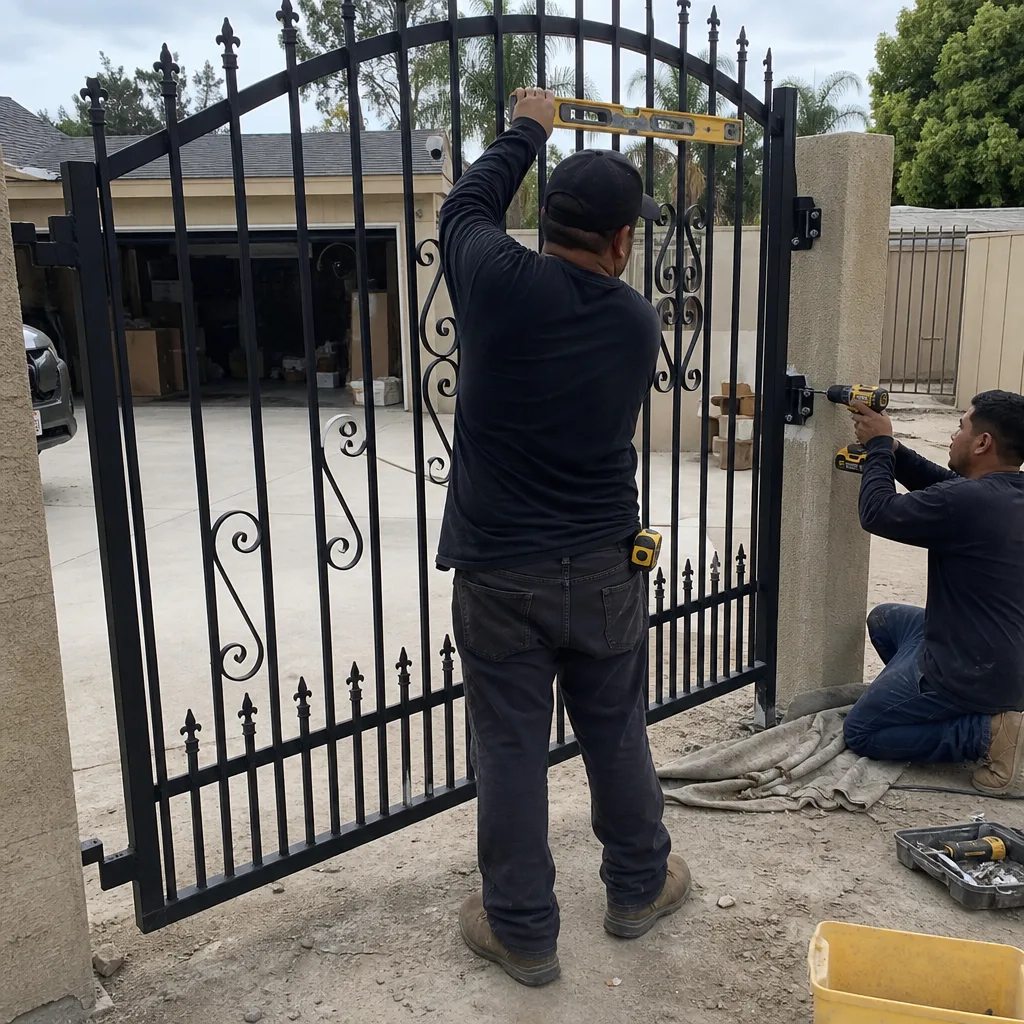
Garden Grove’s conditions shape how gates fail here. Ignore the local context and you’ll misdiagnose. Here’s what we see across Garden Grove, from the West Garden Grove tract homes to the neighborhoods east of Harbor Boulevard.
Soil movement: Garden Grove sits on expansive clay soil in many areas. The soil swells with winter moisture and shrinks in summer heat. Gate posts set in concrete that doesn’t extend deep enough will lean over years as the soil cycles. A leaning post is the root cause of sagging gates, hinge gaps, and latch misalignment. It also changes the load on the operator, which shortens motor life. Fixing it properly means resetting the post at a depth that reaches stable soil, often 24 to 36 inches.
Marine influence: Garden Grove is close enough to the coast that salt in the air, particularly on foggy mornings, accelerates corrosion on steel gates and unpainted hardware. Hinges, brackets, and bolts rust faster here than in inland cities. Powder coating protects the gate face, but the hardware underneath needs attention. Stainless steel hinges and galvanized bolts are worth the extra cost on a replacement.
Sun exposure: The same marine layer that carries salt also gives way to intense afternoon sun in summer. Rubber seals on photo-eyes degrade. Plastic housings on control boards become brittle. A gate operator on a south-facing or west-facing position in Garden Grove will age faster than one on a shaded north wall. UV damage to wiring insulation inside the operator housing is a common find on older units.
City code: Garden Grove follows California building codes for gate operators, which include safety requirements for entrapment protection. Any gate operator installed on a property must have working photo-eyes or contact edges. If your operator is older and lacks these, a repair technician may be required to bring it into compliance during a major repair. This isn’t a upsell. It’s the law, and it exists because gate entrapment is a real and documented hazard, particularly with operators installed before the current standards.
What all of this means is that a Garden Grove gate has a different failure profile than a gate in Anaheim or Westminster. The soil, salt, and sun each tilt the odds toward specific failure modes. A technician who works in Garden Grove regularly knows to check the post depth and the corrosion at the base of the hinge before assuming the motor is the problem.
Common Mistakes to Avoid
- Ignoring a hesitation because “it still works.” The hesitation is diagnostic gold. It tells a technician exactly which component is near failure. By the time the gate stops working entirely, the cheap fix has often become an expensive one.
- Lubricating a grinding sound. Grinding means metal contact, and lubricant hides the symptom without fixing the cause. The component keeps wearing. The sound may even go away for a while, but the damage continues in silence.
- Forcing a sagging gate closed by lifting it. This is how fingers get broken and how the sag gets permanently worse. Lifting the gate at the latch point bends the frame and accelerates fatigue at the hinges.
- Replacing the remote before the receiver. When range shrinks, homeowners in Garden Grove often buy a new remote first. If the receiver circuit is the failing part, the new remote won’t fix it. Diagnose before buying.
- Assuming a motor replacement is needed because the gate won’t move. Works-manually-fails-under-power is a capacitor, voltage, or safety system issue far more often than a motor failure. A written diagnosis, with measurements and photos, tells you which one.
- Skipping documentation on a repair. If a technician replaces a part and doesn’t tell you what it was, you’re flying blind on the next failure. You should leave every service visit knowing which part was installed, what was adjusted, and what it cost. In writing.
When to Call a Professional
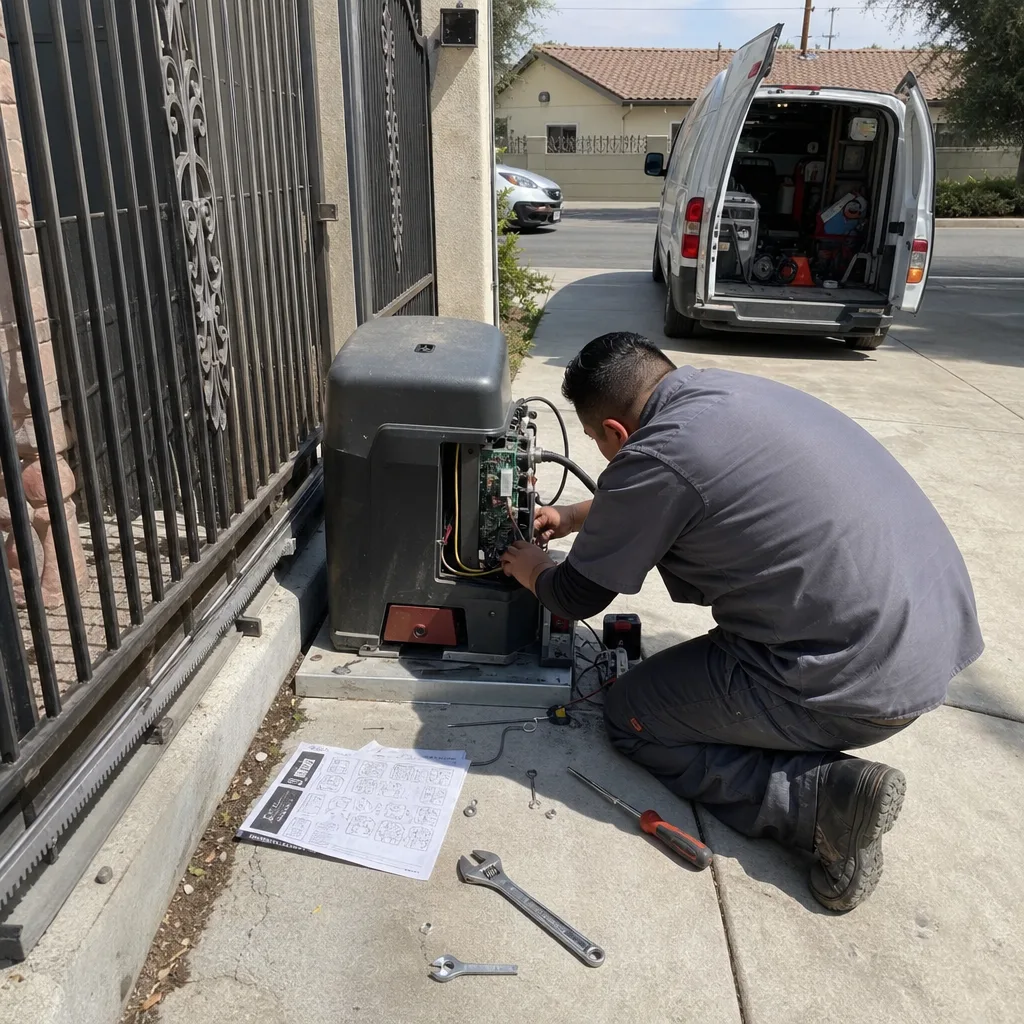
Call a professional when the gate hums but doesn’t move, when it reverses unpredictably, when you see a visible crack in the metal near a hinge, or when the gate has settled enough that the latch no longer aligns. These are not weekend projects. A gate operator contains high-tension springs, heavy steel components, and electrical wiring that can deliver a serious shock. The motor capacitor alone stores enough charge to hurt you even after the power is cut. If you’re unsure whether the symptom is urgent, call and describe it. A live person answers at Gate Motor & Opener in Garden Grove service line twenty-four hours a day. Vance Gate Repair Garden Grove offers free estimates in Garden Grove, call (657) 837-6867, and we’ll tell you honestly whether it can wait.
Frequently Asked Questions
Most gate repairs in Garden Grove range from $180 to $650 depending on the component. A capacitor replacement runs $140-$240, a hinge rebuild $200-$450, a photo-eye realignment $120-$180, and a full motor replacement $800-$1,400 installed. These are the numbers we quote before work starts, in writing. A verbal estimate over the phone means nothing; a written price, as required by Clause 1 of the Haven Standard, means everything. Call (657) 837-6867 for a written estimate before any work begins.
For urgent failures, a humming motor, a gate that reverses and won’t close, a gate stuck in the open position, we dispatch same-day in Garden Grove when a technician is available. A live person answers the phone 24 hours a day, seven days a week, and can tell you immediately whether a same-day visit is possible. This isn’t a promise we make lightly. If we can’t get to you same day, we tell you that on the phone, not after you’ve waited all afternoon. Call (657) 837-6867.
Repair means the motor’s core components, the armature, the stator, the drive train, are intact and the failure is in a replaceable part like the capacitor, the limit switch, or the control board. Replacement means the motor itself is burned out or the gearbox is destroyed. A good technician tests the capacitor, measures voltage, and inspects the gearbox before recommending replacement. We service LiftMaster, FAAC, BFT, and Linear operators, among others, and our bias is always toward repair when repair is honest.
Residential gate motors in Garden Grove typically last 7 to 12 years, but the local conditions, salt air, sun exposure, soil movement, shorten that for many units. A motor installed on a leaning post or a sagging gate will fail years earlier because it’s working against mechanical resistance every cycle. The operator’s environment matters as much as its quality. A well-maintained unit with clean sensors, a properly hung gate, and a sheltered location can push 15 years. A neglected one can die at five.
Yes. We install operators on existing gates regularly in Garden Grove, provided the gate is structurally sound, the posts are stable, and there’s a power source nearby. The installation includes the operator, the safety photo-eyes, the control wiring, and the programming. A free measure and written estimate is available, call (657) 837-6867. For full gate replacement or new construction, see our Gate Installation in Garden Grove page.
Intermittent gate failures in Garden Grove usually trace to one of four causes: photo-eye misalignment from sun glare, moisture in a junction box or splice, a failing capacitor that works when cool and fails when hot, or a loose wire at a terminal. The time of day and weather when the failure happens are the clues that identify which one. Document when it fails, what the weather is, and what the gate does, then call (657) 837-6867 with that evidence. It shortens the diagnosis considerably.
The Bottom Line
Gate failure is a sequence, not an event. The hesitation, the grinding, the sag, the intermittent reversal: each is a data point that points to a specific component with a specific cost to fix. The homeowners who act on warning signs early pay capacitor prices. The ones who wait pay motor prices. Garden Grove’s soil, salt, and sun accelerate every one of these failure modes, which means vigilance here pays off faster. Document the symptom, note the conditions, and call a professional who will give you a written diagnosis and a written price before any work starts. For more guides & resources, explore our blog. Evidence first. Always.
Written by Adrian Vance, Owner at Vance Gate Repair Garden Grove, serving Garden Grove since 2014.