
Last updated September 20, 2026
Free on-site gate assessment - hinges, posts, and your LiftMaster or Nice gate operator checked before anything is quoted
The assessment is free and the quote is the invoice.

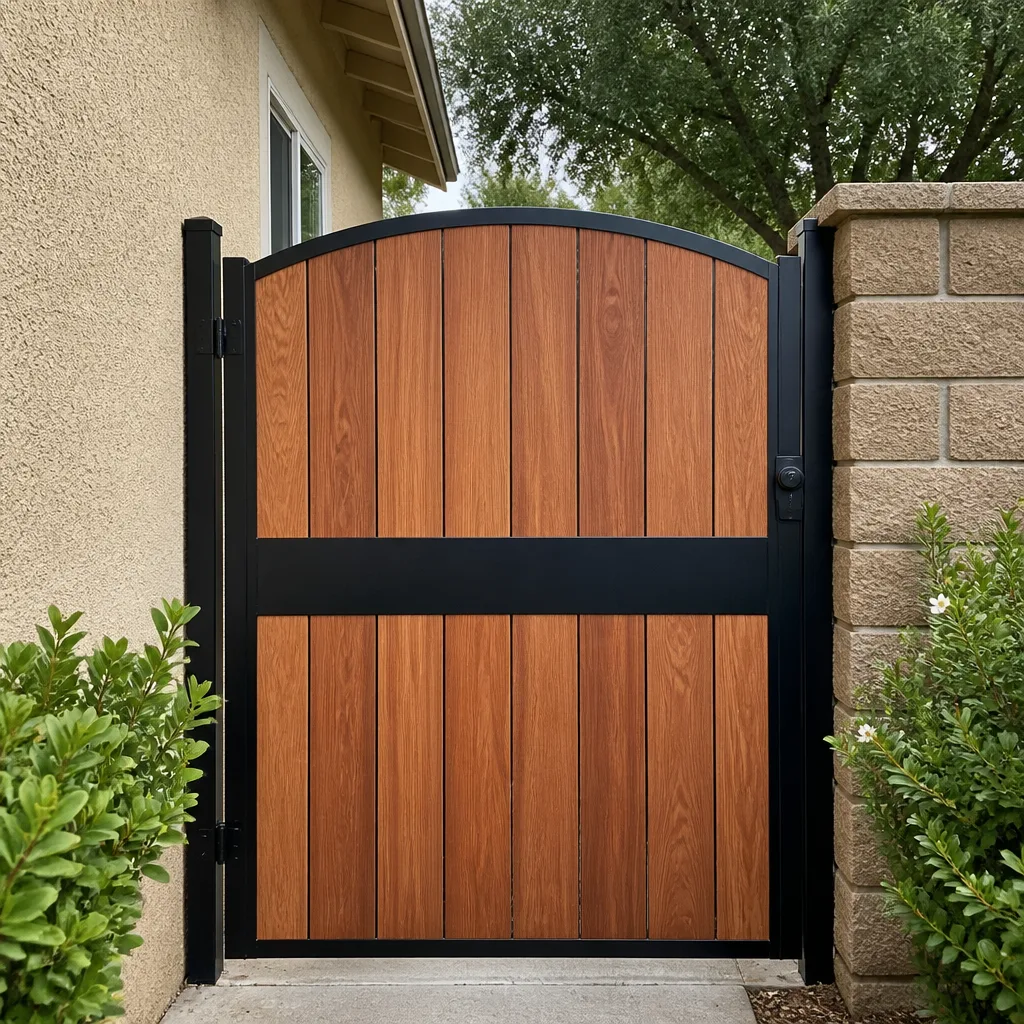

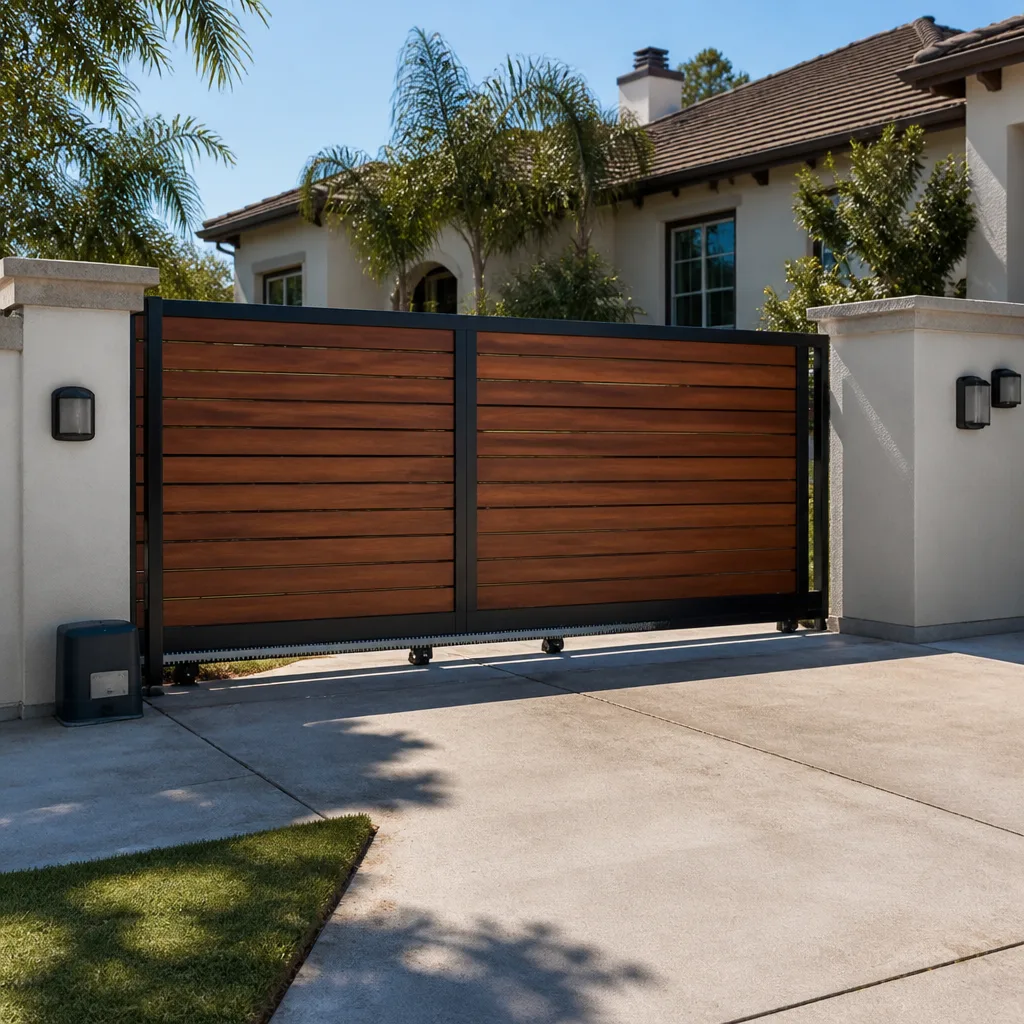
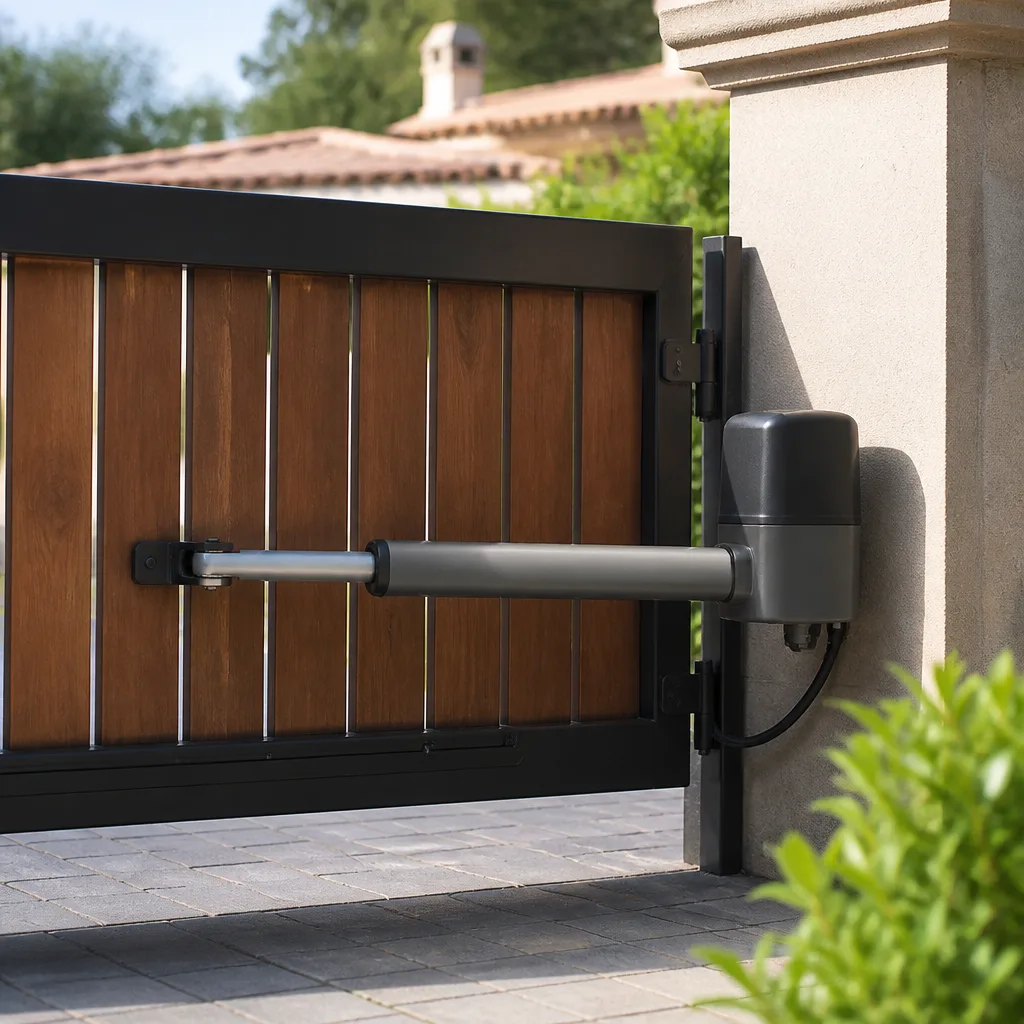
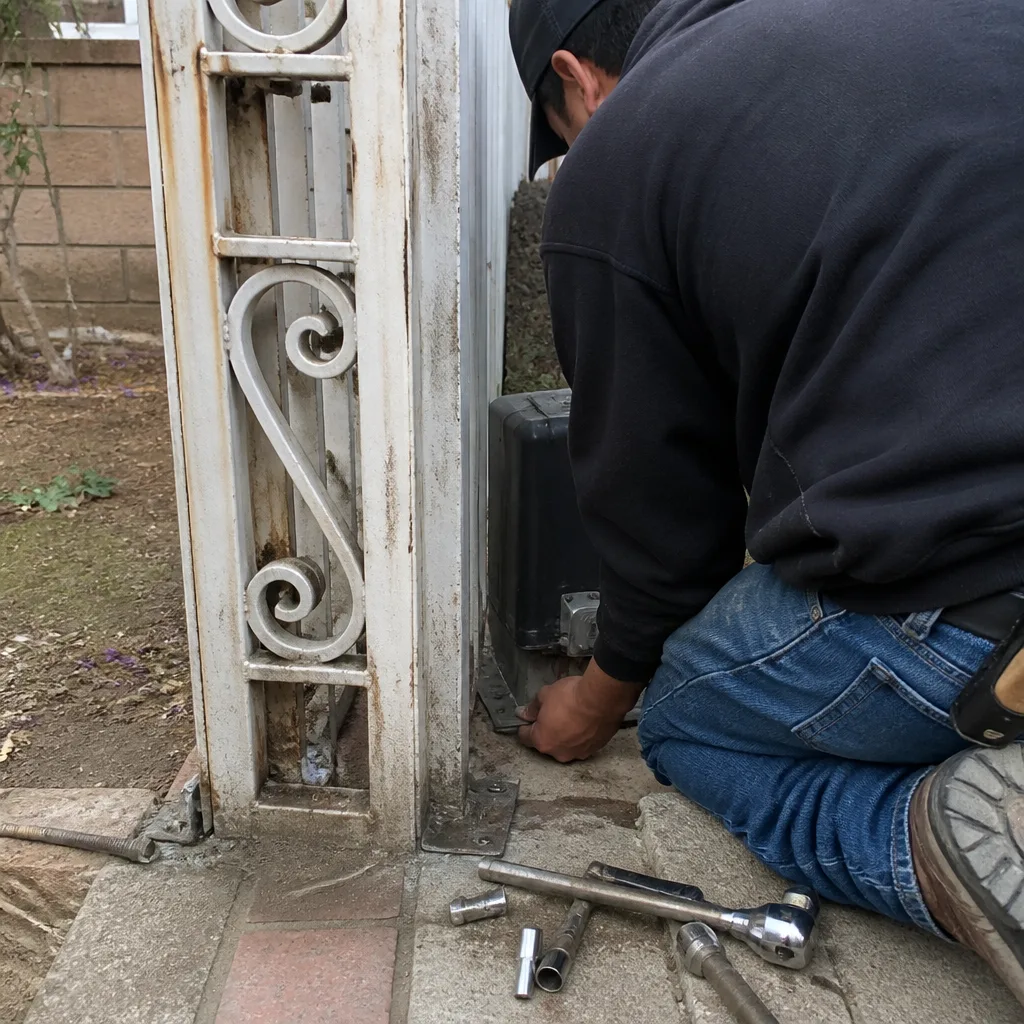 Before
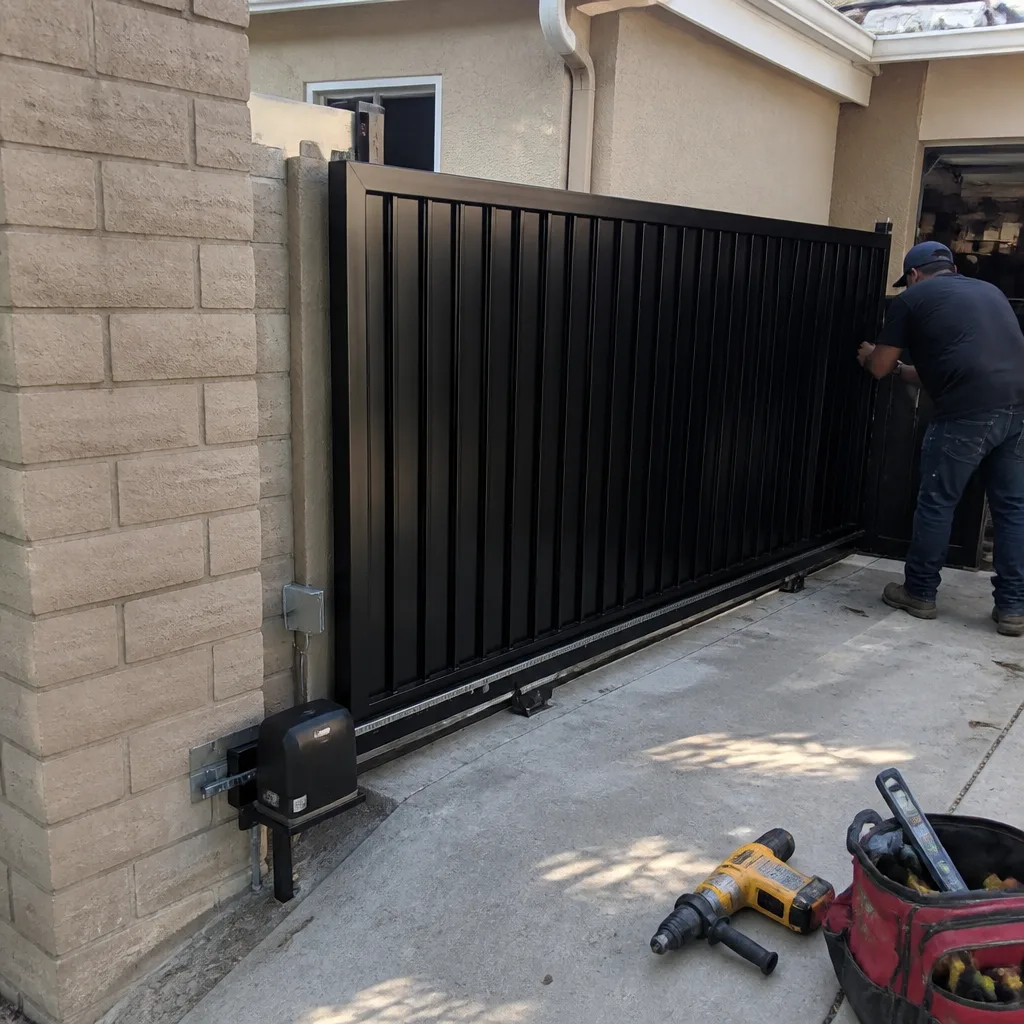 After
After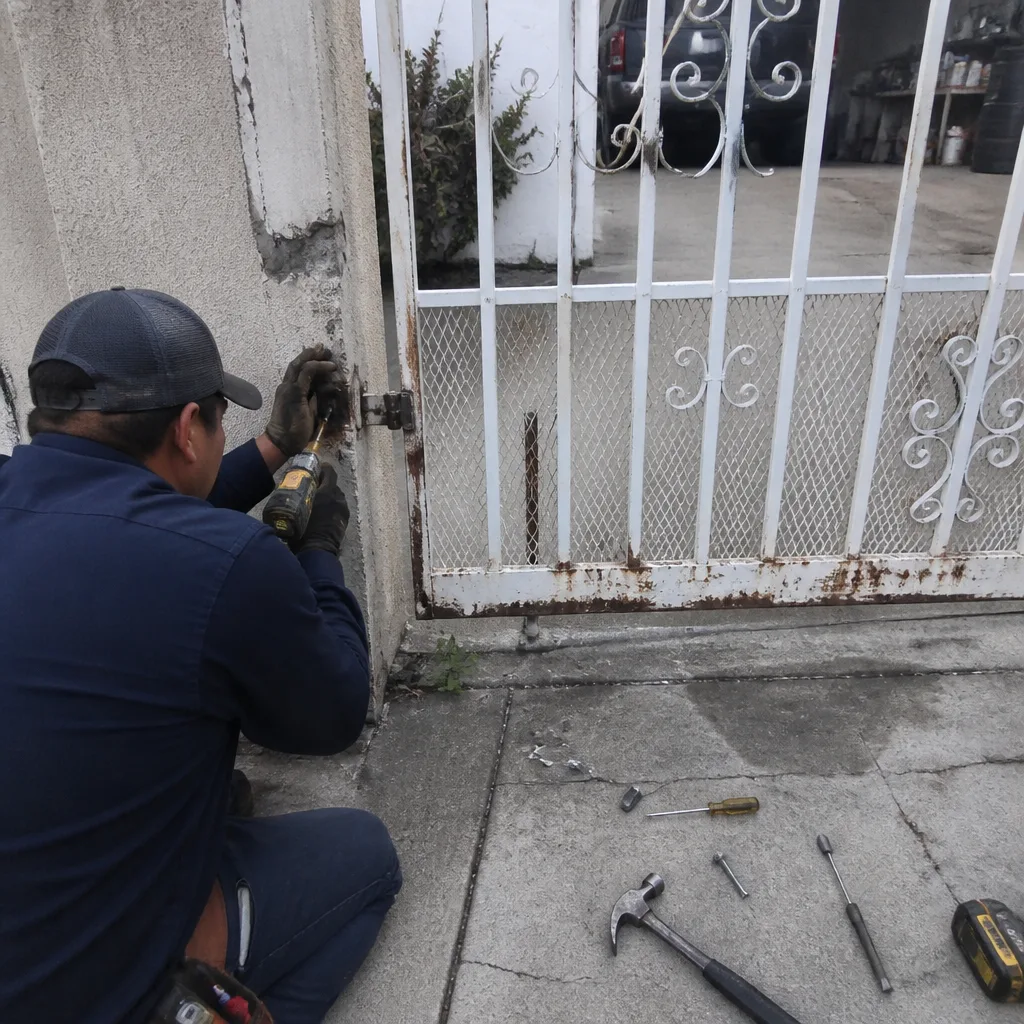 Before
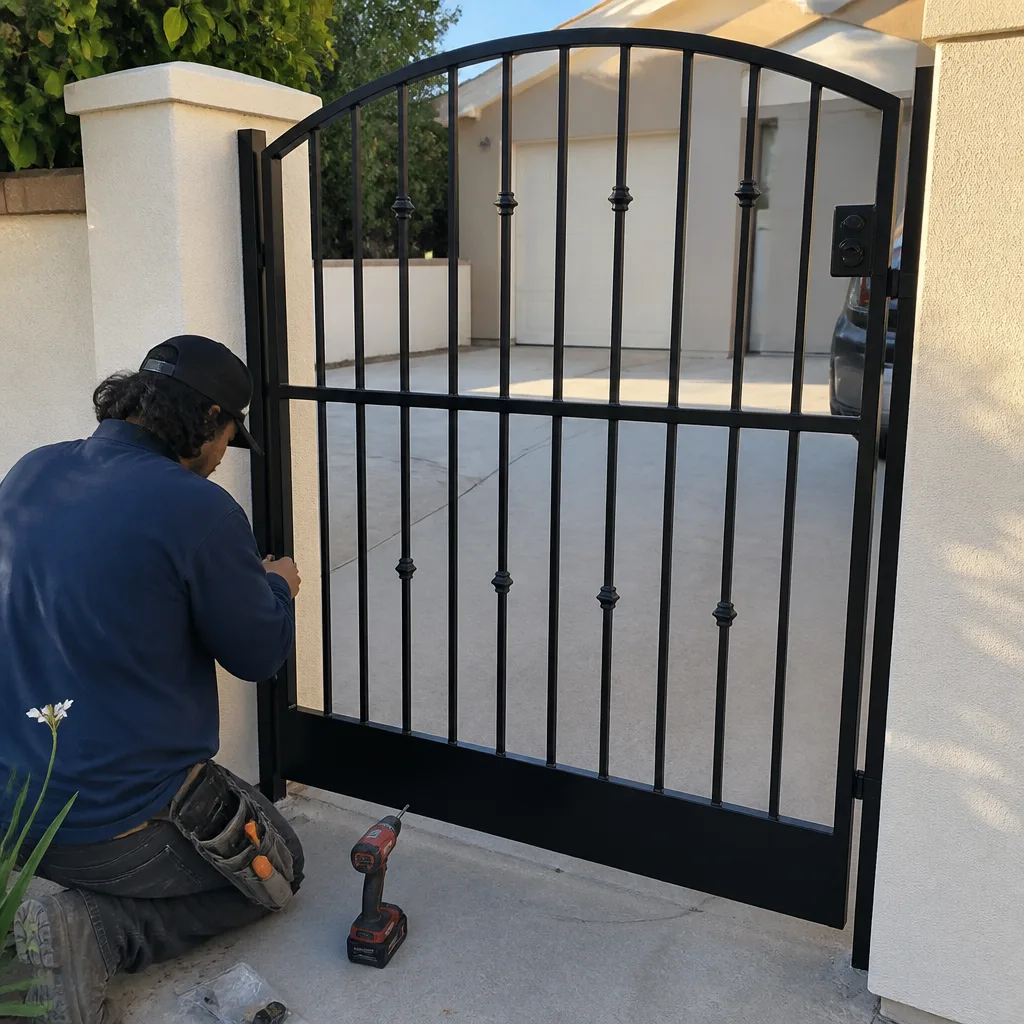 After
After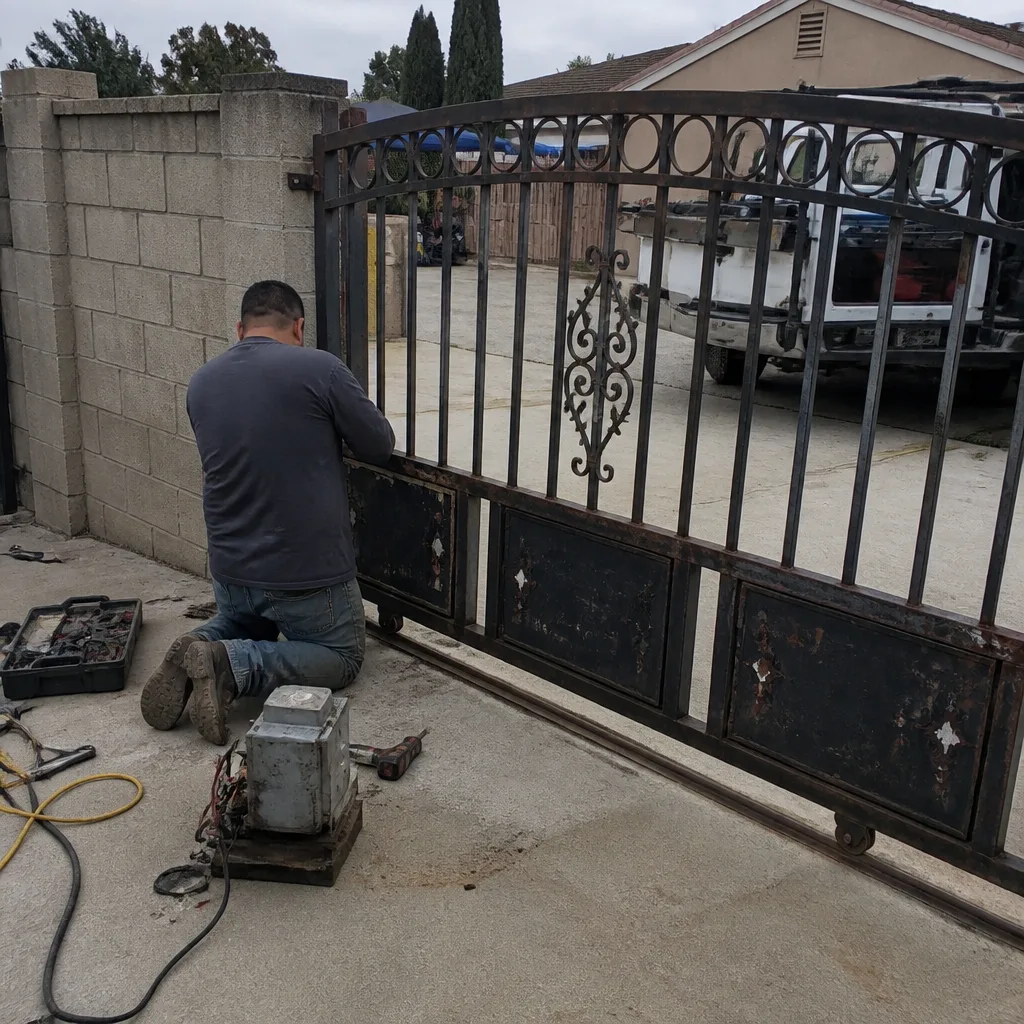 Before
 After
AfterGate Repair Permits, Codes & Inspections in CA: What You Need to Know
Most homeowners in Garden Grove don’t realize there’s a legal difference between the safety standard that governs how a gate operator behaves (UL 325) and the building permit that governs whether the work is legal to perform at all. They’re separate obligations with separate enforcement paths. That distinction matters, because a gate that gets installed perfectly to UL 325 spec but without a required permit is still an unpermitted installation, and in an Orange County jurisdiction, an unpermitted gate operator is an uninsured liability if the gate injures someone and the homeowner’s insurance discovers the unpermitted work during the claim. This guide maps exactly which gate projects in Garden Grove trigger a permit, which trigger a UL 325 compliance obligation, and which trigger both, so you can approach a gate project knowing what the inspector will look at and what documentation you should keep.
Quick Answer
In California, most gate repairs (replacing a wheel, rewiring a photo-eye, adjusting a limit switch) do not require a building permit, but any new installation of a gate operator or any structural replacement of the gate itself generally triggers a permit in Garden Grove and Orange County. Every motorized gate installed in California must also comply with UL 325, the national safety standard for automated gate operators, regardless of whether a permit is required. The two requirements overlap on new installs and diverge on repairs, and understanding that split is what protects you from fines, failed inspections, and insurance denials.
Table of Contents
- The Garden Grove Permit Threshold: Repair vs. Installation vs. Replacement
- What UL 325 Actually Requires (and What It Doesn’t)
- Where Permit Requirements and UL 325 Overlap
- How to Read a Gate Operator Inspection Checklist
- Unpermitted Gate Operators and Home Sales: The Disclosure Problem
- The Paper Trail: What a Compliant Gate Installation Produces
- When a Homeowner Can Do the Work (and When They Can’t)
- Common Mistakes to Avoid
- When to Call a Professional
- Frequently Asked Questions
BeforeAfterThe Garden Grove Permit Threshold: Repair vs. Installation vs. Replacement
Building departments in Orange County, including Garden Grove, draw the line between a repair and an installation the same way the California Building Code does. A repair restores existing equipment to its original operating condition. An installation creates something new, and a replacement that changes the footprint, the load path, or the electrical supply is treated as an installation. Here’s how that plays out on a gate:
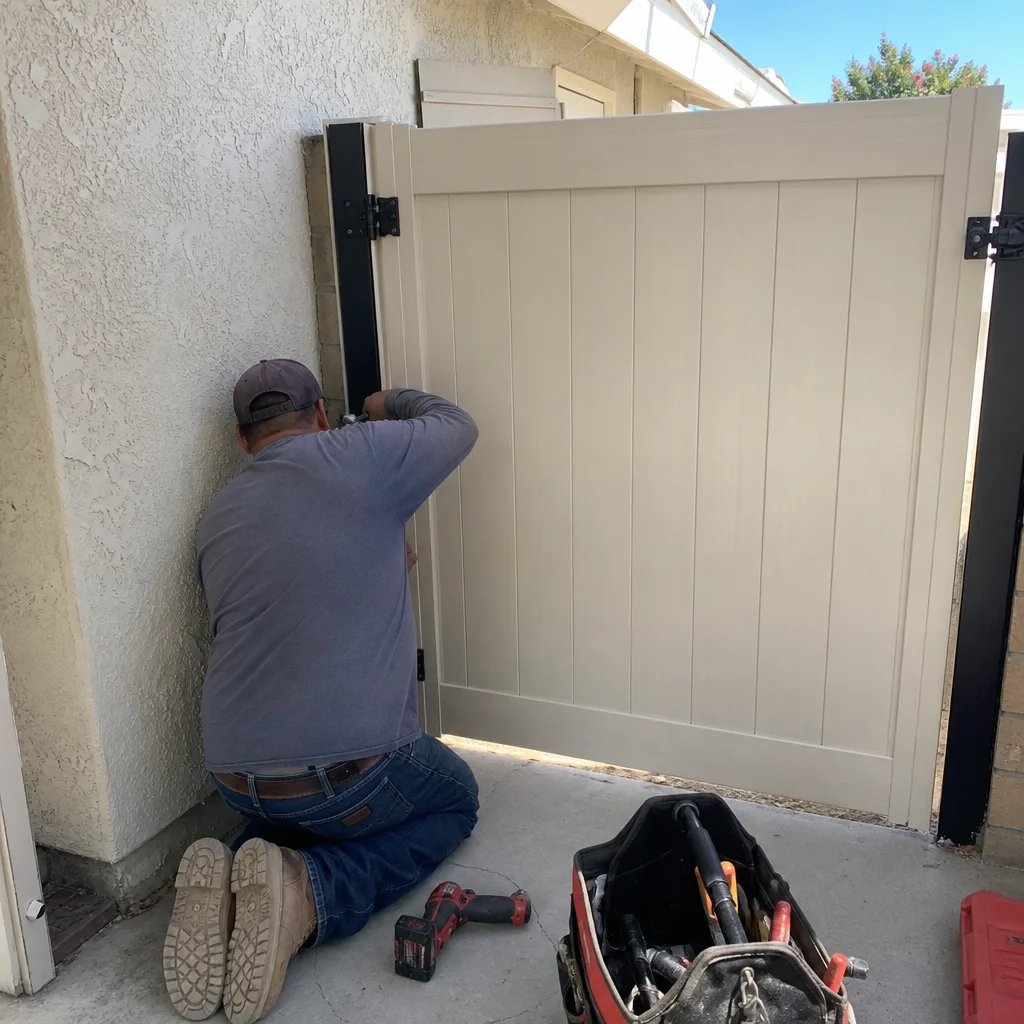
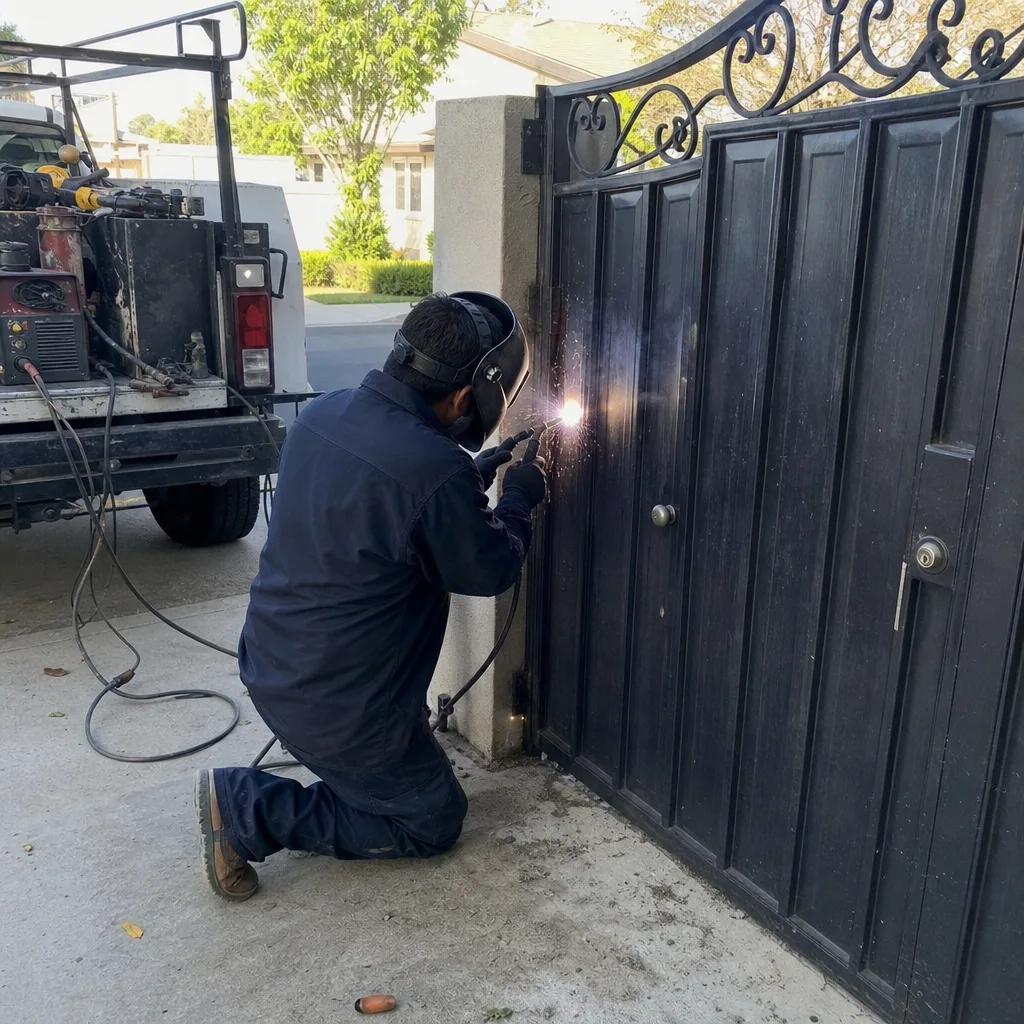
- Repairs that do not require a permit: Replacing a gate wheel, rewiring a photo-eye, replacing a limit switch, adjusting the operator’s travel settings, swapping out a battery, replacing a bent hinge bracket, or welding a crack in an existing gate frame. If the gate’s physical footprint and electrical draw don’t change, the building department doesn’t need to know.
- Installations that require a permit: A new gate operator on a gate that never had one, a new gate structure (even if a gate existed before), a new power run from the panel to the gate, and a gate operator replacement where the new motor draws more amperage than the original circuit was permitted for.
- The gray zone: Some cities treat a full operator replacement on an existing permitted gate as a like-for-like repair, and some don’t. In Garden Grove, if the replacement operator requires a new circuit or a larger breaker, the permit conversation opens. If it’s the same load on an existing circuit, it usually stays a repair.
There’s a second, quieter overlay: even when a permit isn’t required, the work still has to comply with the California Electrical Code. Every gate operator installation or repair we’ve done in gate motor and opener work in Garden Grove involves line-voltage conductors within the operator housing itself. That’s not a place for homeowner improvisation. The building department doesn’t need to inspect that, but the insurance company and the UL 325 standard absolutely do.
What UL 325 Actually Requires (and What It Doesn’t)
UL 325 is the safety standard that governs automated gate operators in the United States. It sets performance and construction requirements, but its most visible application is entrapment protection: the systems that keep a moving gate from crushing, pinning, or dragging a person. California adopted the most recent versions of the standard through the California Building Code, and it applies to every motorized gate and gate operator in the state, plus all residential gate operators manufactured or sold for use in California. In practice, that means every gate operator installed in or around Garden Grove must carry a UL 325 listing mark.
What UL 325 actually requires at the installation level:
- Two independent forms of entrapment protection on every automated gate. For residential swing and slide gates, that’s typically inherent entrapment protection (current sensing or reversing edge built into the operator) paired with a secondary device like a photo-eye (an infrared beam across the gate path that stops or reverses the gate when broken) or an edge sensor mounted on the leading edge of the gate that reverses the gate on contact.
- Proper photo-eye placement. UL 325 requires photo-eyes to be installed so that the beam covers the full path of the gate’s travel, including the zone where the gate meets the post or the wall. A photo-eye mounted at a height the beam can step over is a code violation, even if the operator works fine.
- Entrapment protection zone signage on both sides of the gate. The signs are the safety language from the standard, in the required size and location, warning that the gate operates automatically and cautioning against reaching through or around it.
- Reversing sensitivity within spec. The operator’s reversing force has to be set so the gate reverses on a contact force below the injury threshold. The exact figure depends on the operator class and gate type, but the setting is tested during an inspection.
- The operator’s warning alarm or reversing behavior on every cycle. Some operators beep before moving; some don’t, depending on class and location. If the operator has an alarm, it must be wired and functioning, not disconnected because it was noisy.
What UL 325 does not require is worth stating clearly, because homeowners confuse the standard with the building code. UL 325 does not require a building permit. It does not require slab thickness specifications, post footing depth, or wet-stamped structural engineering. It does not require the operator to be installed by a licensed contractor. Those things live in the building code and the electrical code, which run parallel to UL 325. A gate can pass a UL 325 compliance check and still be an unpermitted structure in Garden Grove. The reverse is true, too: a gate can have a permit and a final inspection sign-off, but that inspection may not have verified the UL 325 entrapment protection settings, because building inspectors in some jurisdictions check for the operator’s UL listing mark but not the full entrapment protection test.
Where Permit Requirements and UL 325 Overlap
For most Garden Grove homeowners, the two requirements only overlap on one project type: a new automated gate assembly that did not previously exist. That’s when the building department wants a permit for the structure and the electrical, and the UL 325 standard imposes its full entrapment protection requirements through the California Building Code. The inspector will look for the UL listing mark on the operator, verify the gate’s reversing behavior, and check that the required entrapment protection signage is installed. The permit card and the inspection sign-off then create a record: this gate is legal and it was safety-tested on this date.
What trips up homeowners is the assumption that a permit inspection is the same thing as a UL 325 compliance audit. It isn’t. Building inspectors in Orange County verify that the required systems are present and roughly functional. They rarely run an instrumented reversing-force test or measure the photo-eye beam height. That’s why a gate can pass a city inspection and still entrap someone on day two if the reversing force was set too high. In our experience, the most common UL 325 failure on Garden Grove gates that have already passed a building inspection is the reversing force setting: the gate reverses on contact with a solid object, but not with enough sensitivity to prevent a hard pinch injury. For a deeper look at what to watch for, see our Gate Repair Warning Signs: A Garden Grove Homeowner’s Reference Guide.
A clean install means both boxes are checked. Gate installation in Garden Grove that involves a new operator should satisfy the permit requirement and the UL 325 standard, and the homeowner should keep evidence of both.
How to Read a Gate Operator Inspection Checklist
When a building inspector comes out for a gate operator installation in Garden Grove, they’re working from a checklist that mirrors the California Building Code and the Orange County municipal code. Knowing what’s on that list lets you check your contractor’s work before the inspector arrives, and it gives you a way to hold the work accountable after the inspector leaves. The checklist essentially asks these questions, in this order:
- Is the operator listed? The inspector verifies the UL 325 listing mark on the operator’s nameplate. If the mark is missing, the inspection stops there and the correction notice is issued.
- Are both forms of entrapment protection present and functional? For a swing gate, that’s the inherent system in the operator plus a secondary device. The inspector will break the photo-eye beam with a hand or a board and watch for the gate to stop or reverse.
- Are the warning signs posted? On both sides of the gate, legible, mounted at the UL 325-specified height. Missing signage is the single most common inspection correction in residential gate work.
- Is the electrical installation correct? The disconnect means, the grounding, and the circuit protection. The inspector wants to see the dedicated circuit and the proper weatherproof enclosure at the operator.
- Does the gate operate within its structural limits? No sagging on the hinge post, the gate travels its full range without binding, and the operator’s force isn’t fighting a mechanical problem.
If you’ve hired a contractor, ask for the inspection checklist results or the same details in a written service record. Under Clause 4 of the Haven Standard (Evidence on every job), Vance Gate Repair Garden Grove home leaves a photographed record of what was found, what was adjusted, and what was replaced on every visit. That documentation is what makes a future service call cheaper: the next technician doesn’t have to rediscover that the photo-eye beam height is 14 inches or that the reversing force was set on March 12.
Unpermitted Gate Operators and Home Sales: The Disclosure Problem
California real estate law requires sellers to disclose any known unpermitted work on the property, and the standard Residential Purchase Agreement asks specifically about unpermitted alterations. That’s where unpermitted gate operators surface, often years after the work was done. The sequence is common: a homeowner installs a motorized gate without a permit in 2021, the home goes on the market in 2026, and the buyer’s home inspector flags the operator because the electrical panel shows a circuit that doesn’t match the permit history. The seller then has two options: reduce the purchase price, or pull a retroactive permit, which in Orange County generally means opening the wall or the electrical run for inspection.
The liability exposure is broader than a sale-day headache. If an unpermitted gate operator injures someone on the property, and the homeowner’s insurance carrier discovers during the claim that the injury was caused by an unpermitted installation, the claim can be denied or the coverage retroactively modified. California courts have upheld that position. We’ve seen the pressure this creates: a homeowner who saved $400 by skipping the permit on a DoorKing operator now faces a $12,000 retroactive permit correction because the original electrical run wasn’t to code. The permit is not a bureaucratic receipt. It’s the document that keeps the insurance valid.
In Garden Grove, the retroactive permit process for a gate operator typically involves a plan review, an electrical inspection of the existing circuit, and sometimes a UL 325 compliance verification. It’s more expensive than pulling the permit up front, and it usually requires correcting whatever the inspector finds before the permit closes. The least expensive permit is the one pulled before the work begins.
The Paper Trail: What a Compliant Gate Installation Produces
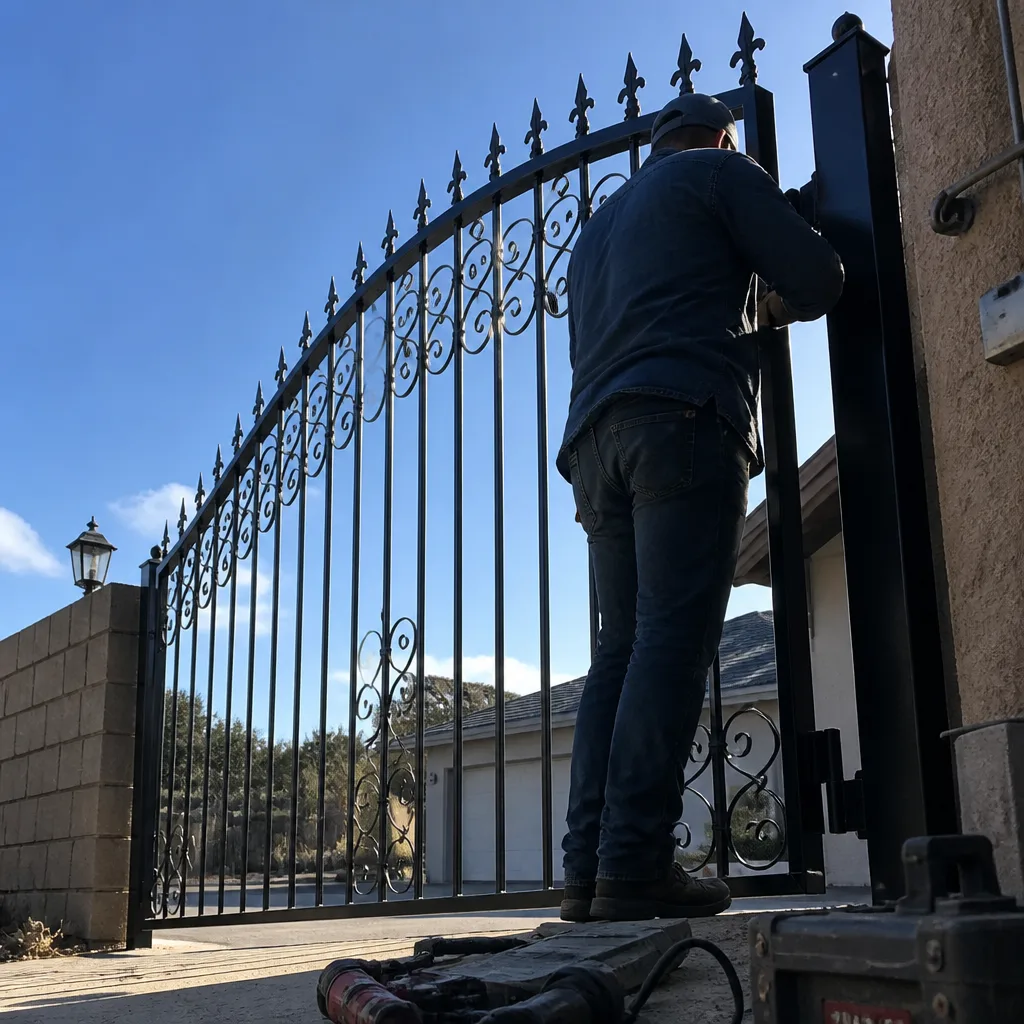
A compliant automated gate installation in Garden Grove should leave you with more than a functioning gate. It should leave a document trail that proves the gate is legal, safe, and serviceable. Keep this file. It’s the single most useful thing you can hand to a future buyer, a future technician, or an insurance adjuster.
- The permit card. The building department’s record of the permit, including the permit number and the project description. In Orange County, the permit card is printed or digital, and it links to the plan check and inspection records.
- The final inspection sign-off. The written proof that the gate installation passed its building inspection. This is the document that answers the disclosure question at point of sale.
- Sensor placement photos. Photographic evidence of the photo-eye height, the edge sensor location, and the reversing force setting at the time of installation. When a future service call requires understanding the original installation, these photos are the difference between a 20-minute fix and an hour of diagnosis.
- The operator’s UL 325 listing documentation. The operator’s model number and the listing mark, generally on the motor itself and in the operator manual. For LiftMaster, Elite, or any other brand, the listing information should be tied to the gate’s records.
- Written confirmation of the price. Under Haven Standard Clause 1 (Have it in writing), the price is handed over before any work starts. That document belongs in the same file, because it protects the homeowner from “the invoice was bigger than the quote” inflation at the end of the job.
In our experience, fewer than one in ten Garden Grove gate installations we see has all five of those documents together. The gate works, the operator was programmed, and then the paperwork sits half-finished in a drawer. The cost of that missing file surfaces exactly once: when the house is in escrow and the buyer’s agent asks about the gate.
When a Homeowner Can Do the Work (and When They Can’t)
California law allows a homeowner to act as the general contractor on their own residence, pulling a permit in their own name and performing the work themselves. That permission extends to gate operators, with one meaningful carve-out: the homeowner must be the one doing the work, the work is on the homeowner’s own primary residence, and the electrical work still has to meet the California Electrical Code. In practice, that means a homeowner can legally install a Mighty Mule operator on their own garden gate, pull the permit, and pass the inspection, as long as the work is actually theirs.
Here’s where we’ve seen the DIY route go wrong, in ways that cost more than a contractor would have:
- Line-voltage work without the wiring knowledge. A gate operator has 120-volt conductors inside it, and the connection to the panel is regulated work. We’ve seen homeowner installs where the circuit was tapped off an existing branch instead of run as a dedicated circuit, and the inspector rejected it.
- Entrapment protection that looks fine but doesn’t function. The photo-eye is mounted, the gate reverses on contact, but the reversing force is set too high, or the photo-eye beam is positioned so a person can step under it. The gate passes the “it works” test and fails the UL 325 test.
- No documentation. The homeowner know what they did, but there’s no record. When the gate fails a year later, the new technician has to reverse-engineer the installation. That’s the entire reason the gate repair service in Garden Grove we provide starts with documenting the previous work before touching a single wire.
The line between advisable and inadvisable DIY is not about intelligence; it’s about documentation and line-voltage wiring. Replacing a gate wheel, adjusting a hinge, even swapping a battery in an operator: an experienced homeowner can do that. Installing a new operator, running a circuit, setting entrapment protection, and producing the permit documentation: that’s where the professionals earn their fee, because the mistake is expensive to undo and invisible for years.
Common Mistakes to Avoid
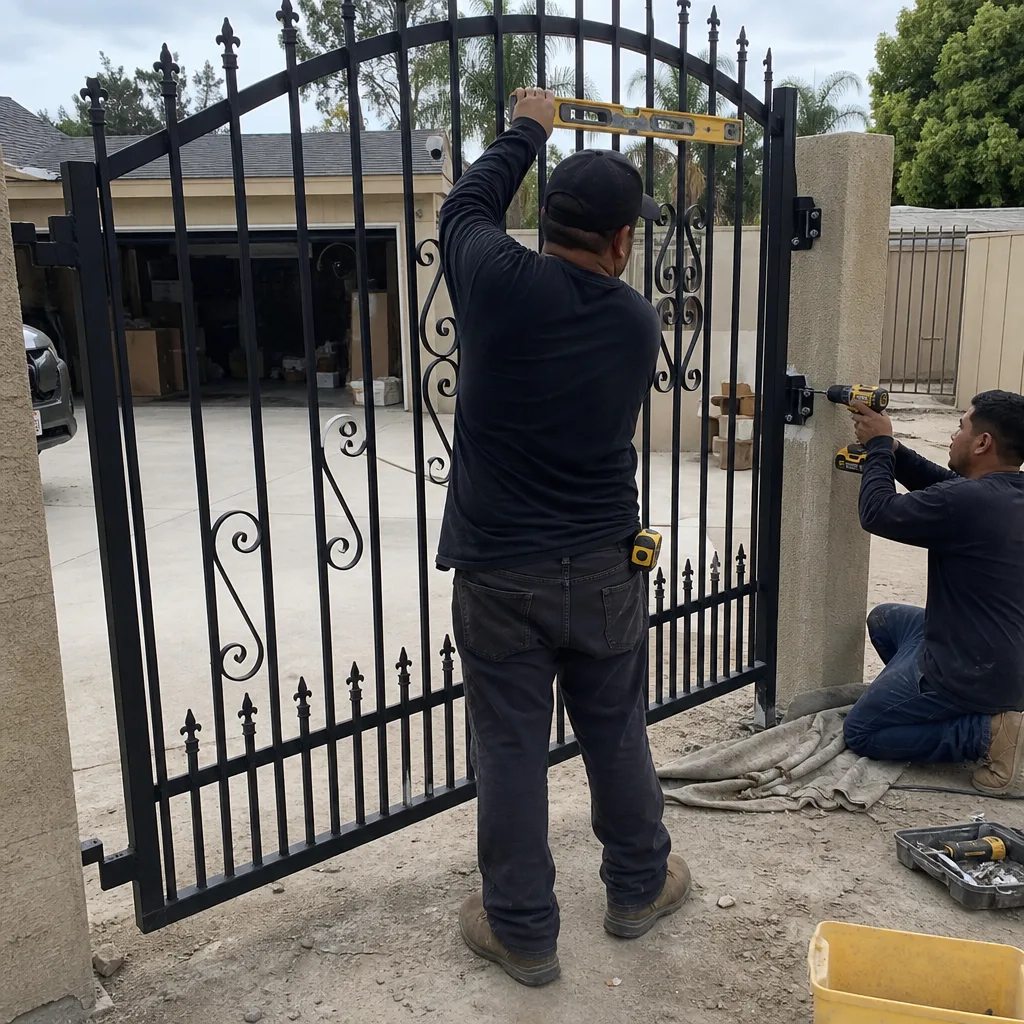
- Assuming a permit isn’t required because the gate “isn’t structural.” A new gate operator on a gate that never had one is an electrical installation, and in Garden Grove it triggers the permit conversation. The operator’s mounting post and the electrical run are part of the permit scope.
- Confusing UL 325 compliance with building code compliance. UL 325 governs the safety systems on the operator. The building code governs the structure and the electrical. A gate can pass UL 325 and still be unpermitted, and it can pass a building inspection and still violate UL 325 on reversing force. They are separate audits.
- Skipping the permit to save money. The permit fee on a gate operator installation in Orange County is typically in the low hundreds of dollars. The retroactive permit correction after an insurance claim or a home sale is typically five to twenty times that.
- Installing a used operator without checking the UL 325 listing. Used operators from auction sites or yard sales often have missing listing marks or damaged nameplates. Without the mark, the inspection stops, and you’re not installing a gate; you’re storing a gate operator until you buy a compliant one.
- Setting the reversing force to “high” because the gate kept reversing. That’s the operator compensating for a mechanical problem, not a mechanical setting. We’ve seen gates where the reversing force was maxed out to push through a sagging hinge, and the gate would have crushed a child before it reversed.
- Not keeping the documentation. The permit card, the inspection sign-off, the sensor placement photos. Without that file, a future sale or a future repair starts from zero. That’s exactly the situation The Haven Standard is designed to prevent.
- Assuming all gate companies pull permits. Some don’t. Some will quote the job without the permit and leave the homeowner with the liability. Ask before the work starts: “Will you pull the permit, and will I get a copy of the final inspection?” If the answer is vague, find another company.
When to Call a Professional
Call a professional when the gate project involves a new operator, a structural gate replacement, a power run from the panel, or any repair where the gate’s reversing behavior has changed. Those are the moments where the permit conversation, the UL 325 compliance obligations, and the line-voltage wiring all converge. The professional’s job is not just to make the gate move; it’s to produce the documentation that proves the gate is legal and safe, and to leave a record of what was installed and how it was set. Vance Gate Repair Garden Grove offers free estimates in Garden Grove, with a written price before any work starts and a documented photo record on every visit. Call (657) 837-6867 if you need the work done and documented right the first time.
Frequently Asked Questions
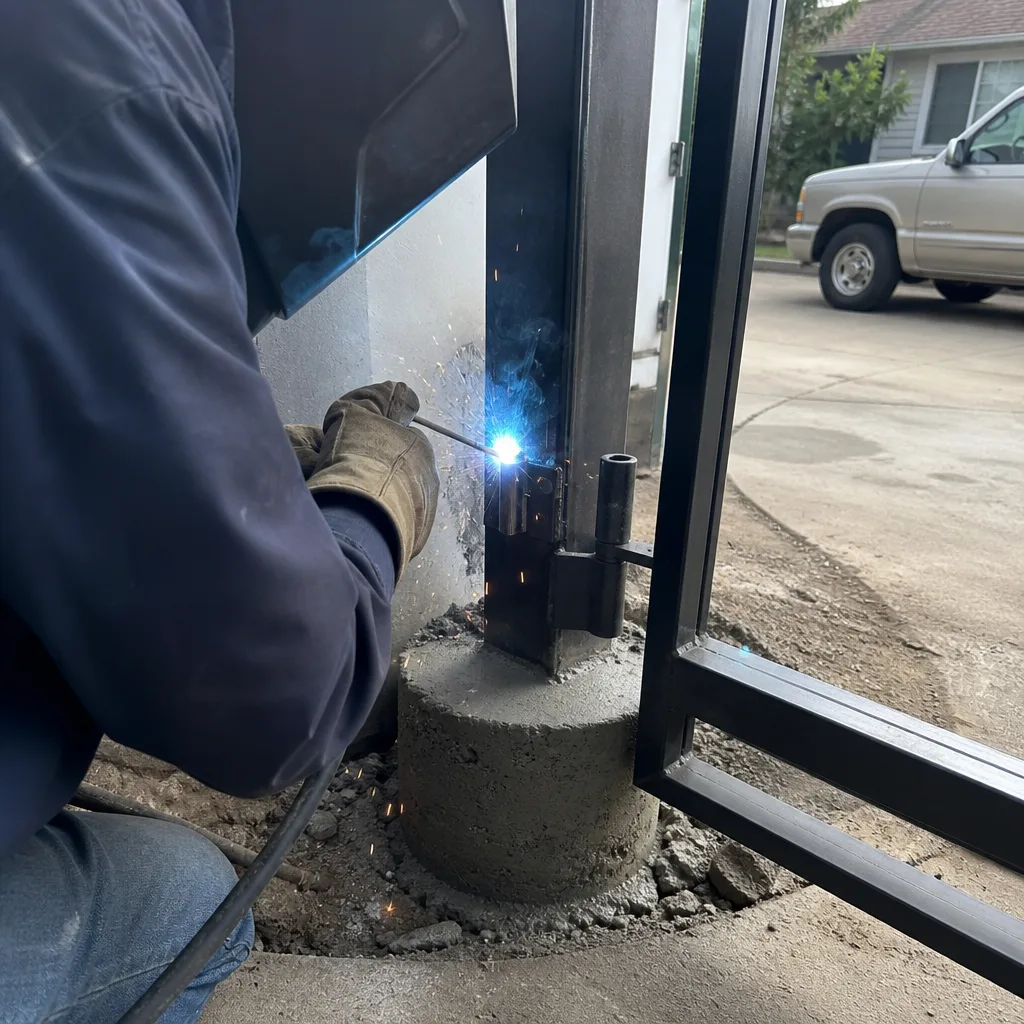
It depends on whether the replacement is like-for-like or changes the electrical load. Swapping an old LiftMaster for a new LiftMaster with the same amperage on the existing circuit is typically treated as a repair and doesn’t require a permit. Installing a larger operator, adding a new circuit, or adding an operator to a gate that never had one triggers the permit requirement. When in doubt, call the Garden Grove Building Division before the work starts. For a specific operator situation, call (657) 837-6867 and we’ll help you confirm the threshold.
Building permit fees for a gate or gate operator installation in Orange County are generally in the low hundreds of dollars, with the exact figure depending on the project scope, the electrical work, and the city’s current fee schedule. Garden Grove sets its own fees annually. The permit is a flat, published cost, and the price of the gate work itself should be quoted separately, in writing, before any tools come out. Call (657) 837-6867 for an exact quote on your specific project; estimates are free.
UL 325 is the national safety standard for gate and door operators, covering entrapment protection, reversing force, warning signage, and operator construction. It applies to every automated gate operator in California, residential and commercial alike, regardless of whether a permit is required. Every operator we install in Garden Grove is UL 325 listed and set up to meet the standard’s entrapment protection requirements.
Yes, and it commonly surfaces during the buyer’s home inspection or the seller’s disclosure step. Unpermitted work has to be disclosed, and the buyer’s inspector will often flag a gate circuit that doesn’t match the permit history. The remedy at that point is a retroactive permit, which is more expensive than the original permit would have been, or a sale price reduction. Keep the permit card and inspection sign-off in your closing file.
Keep the permit card, the final inspection sign-off, sensor placement photos, the operator’s UL 325 listing information, and the written price agreement. Together, those five documents prove the gate is legal, safe, and serviceable, and they make future repairs faster. Under Haven Standard Clause 4, every visit we make in Garden Grove includes a documented photo record of what was found, what was set, and what was installed.
Most repairs that restore the operator to its original condition do not require an inspection, including logic board replacement, photo-eye rewiring, limit switch adjustment, and wheel or hinge replacement. Work that changes the gate’s electrical load, adds a new operator, or modifies the structure falls back under the permit requirement. A free phone call is the fastest way to know which category your specific repair falls into: (657) 837-6867.
The Bottom Line
In California, the difference between a repair and an installation defines your permit obligation, and the difference between the building code and UL 325 defines your safety obligation. New operator installs trigger both. Simple repairs trigger neither, but they still have to be done safely and on a legal electrical circuit. The unpermitted operator is the liability that hides until the home sale or the insurance claim, and the missing documentation is what forces a homeowner to pay twice for the same discovery. In Garden Grove, the clean way through is to know which category your project falls into before the work starts, keep the paper trail, and treat the permit card as the most valuable document on the property. A documented gate is a cheap gate to maintain, and an undocumented gate is an expensive one to sell. Explore more guides & resources on keeping your gate compliant.
Written by Adrian Vance, Owner at Vance Gate Repair Garden Grove, serving Garden Grove since 2014. Learn about our Gate Repair services.